
Structuring Your Social Media Team for Scale: A Workflow Guide for Modern Organizations
Learn how to build an effective social media team structure, specialize roles, maintain brand governance, and streamline multi-platform publishing workflows.
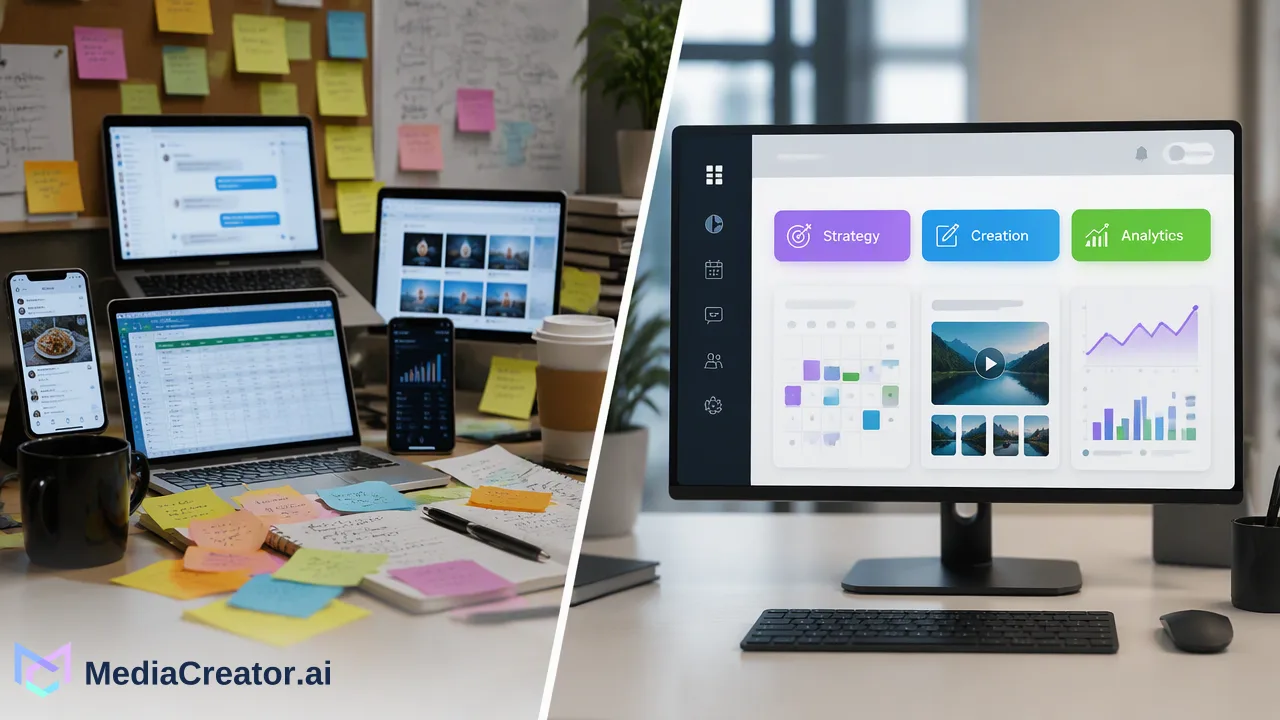
Discover how modern organizations design a scalable social media team structure by separating strategy, creation, community management, and analytics with centralized governance.
Scaling an organization's social media presence requires transitioning from a single generalist to dedicated specialist roles focused on strategy, content creation, community engagement, and performance analytics. To keep distributed contributors aligned without operational friction, organizations rely on centralized management software that unifies account access, visual scheduling, and engagement workflows across multiple networks.
The Evolution of Social Media Roles
In early-stage operations, organizations often assign social media management to an individual generalist who handles copywriting, video editing, customer replies, graphic design, and reporting simultaneously. As publishing cadence and channel footprints expand across TikTok, Instagram, Facebook, and YouTube, this single-operator model encounters bandwidth bottlenecks and inconsistent posting intervals. Scaling operations requires role specialization to divide labor into core competencies:
- Social Media Strategist: Owns channel positioning, overarching campaigns, distribution planning, and cross-functional alignment with paid advertising and public relations. - Content Creator and Designer: Specializes in producing multimedia assets, video packages, visual graphics, and platform-adapted copy. - Community Manager: Monitors audience interactions, direct messages, and mentions to maintain timely engagement and escalate customer inquiries. - Social Data Analyst: Evaluates cross-network performance metrics, post distribution trends, and audience retention data to inform editorial adjustments.
Organizational Models for Growing Teams
Choosing the appropriate organizational model depends on operational scale, company structure, and the degree of autonomy required by regional or product divisions. Modern marketing departments primarily deploy one of three organizational frameworks. | Model | Team Arrangement | Operational Advantages | Key Governance Needs | | :--- | :--- | :--- | :--- | | Centralized | Single core team servicing all business units | High brand consistency and shared tool investments | Prioritization queues to manage cross-department requests | | Functional / Decentralized | Embedded specialists inside individual product or regional teams | Fast responsiveness to niche product updates | Brand guidelines to avoid divergent messaging styles | | Hub-and-Spoke (Center of Excellence) | Central governance hub with embedded channel or regional spokes | Balances company-wide standards with localized execution | Centralized software connecting all accounts with defined workflows | For enterprise brands and growing agencies, the hub-and-spoke model offers scalable governance. The central hub defines editorial guidelines, monitors macro analytics, and maintains software access, while regional or vertical spokes execute daily publishing and engagement.
Centralizing Operations for Brand Governance
Specialized teams cannot scale effectively without centralized infrastructure to manage administrative access, collaborative approvals, and incoming interactions. Operating across separate platform native apps increases operational complexity and security risks. MediaCreator.ai serves as a web-based social media management platform that anchors team workflows in a single control dashboard. Connected accounts across TikTok, Instagram, Facebook, and YouTube are authenticated via OAuth 2.0 protocols, eliminating browser extension requirements and credential sharing between team members. Multiple profiles per platform can be linked and managed simultaneously. Operational oversight relies on a shared cross-platform publishing calendar that organizes content through transparent workflow stages:
- Draft Stage: Copywriters and visual designers compose posts, tailor text to specific platform limits, and generate previews showing exact rendering across target platforms. 2. Queued Stage: Approved posts enter scheduled time slots aligned with upcoming editorial initiatives. 3. Published Stage: Completed posts display historical delivery states alongside live engagement records. Community managers operate from a unified social inbox that consolidates incoming comments, direct messages, and @mentions from all connected accounts. This shared feed allows teams to review incoming inquiries, prioritize customer feedback, and respond without shifting between native mobile interfaces.
Integrating AI into Creative and Review Workflows
To maintain high output without burning out creative staff, organizations integrate AI tools to accelerate draft production while reserving critical judgment for human editors. Modern creative workflows apply generative capabilities to eliminate drafting bottlenecks. Within the MediaCreator.ai web workspace, teams access optional tools like Content Studio to generate image assets from text prompts and reference imagery, saving finished outputs directly into the shared media library. For copywriting, Quick Caption generates channel-adapted text drafts directly from uploaded media assets. To keep distributed creators aligned with organizational tone, the platform's Brand Voice capability stores reusable tonal profiles that inform AI generation. Crucially, workflow governance remains protected by design: all AI-assisted actions require human review through an interactive confirm card before any post can be scheduled or moved toward publication, ensuring automated text is never dispatched without explicit operator consent.
Data-Driven Scaling and Editorial Planning
A scalable social media team structure requires closed feedback loops between performance data and future campaign planning. Analysts and strategists review per-account and per-post performance metrics directly inside the web dashboard to assess audience engagement and publishing reach. These analytics inform calendar management through data-backed posting-time recommendations. Rather than relying on guesswork across disparate time zones, strategists evaluate historical delivery trends to schedule queued posts during windows when audience visibility is highest. Combining specialized roles with unified scheduling, engagement, and reporting software provides organizations with the operational structure required to expand social operations sustainably.
FAQ
How do organizations transition a social media team from generalist to specialist roles?
Organizations typically begin the transition by auditing time allocation across daily operations. As volume expands across channels like TikTok, Instagram, Facebook, and YouTube, teams separate high-level campaign planning from asset production, community moderation, and reporting. Establishing specialized roles allows strategists to focus on distribution roadmaps while dedicated creators produce tailored media and community managers handle direct audience interactions.
Why is a centralized platform necessary when scaling a social media team structure?
Centralized platforms provide the operational governance required to coordinate distributed team members. By connecting social profiles via secure OAuth 2.0 authentication, platforms eliminate shared login credentials across personnel. A central workspace coordinates drafts, queues, and published posts on a unified visual calendar, while aggregating direct messages and comments into one shared inbox for structured moderation.
How can AI tools support brand voice across distributed team members?
Centralized systems store reusable Brand Voice tone profiles that guide AI text generation tools, such as Quick Caption. When copywriters or campaign managers generate draft captions from uploaded media, the system applies these preset stylistic boundaries. Furthermore, mandatory confirmation cards require team members to manually review and approve every AI-assisted draft before scheduling or publishing.
Learn More
Choose the product information that fits the next step in your workflow.
Get Started with MediaCreator.ai
Discover the power of AI-driven content creation
Related Articles
Continue learning with these related guides
How to Integrate Boosted Reels into Your Social Media Publishing Workflow
Integrate boosted Instagram Reels into your social publishing workflow. Balance organic planning, eligibility, brand voice, and analytics.
BlogThe Full-Funnel Social Media Strategy: Mapping Content Formats to Business Goals
Learn how to build a full-funnel social media strategy by mapping short-form discovery and long-form consideration into a unified cross-platform workflow.
Blog