
Building a Centralized Asset Library: Managing Hashtags at Scale
Discover how social media asset library management helps teams centralize hashtags and captions, reducing manual errors across multiple platforms.
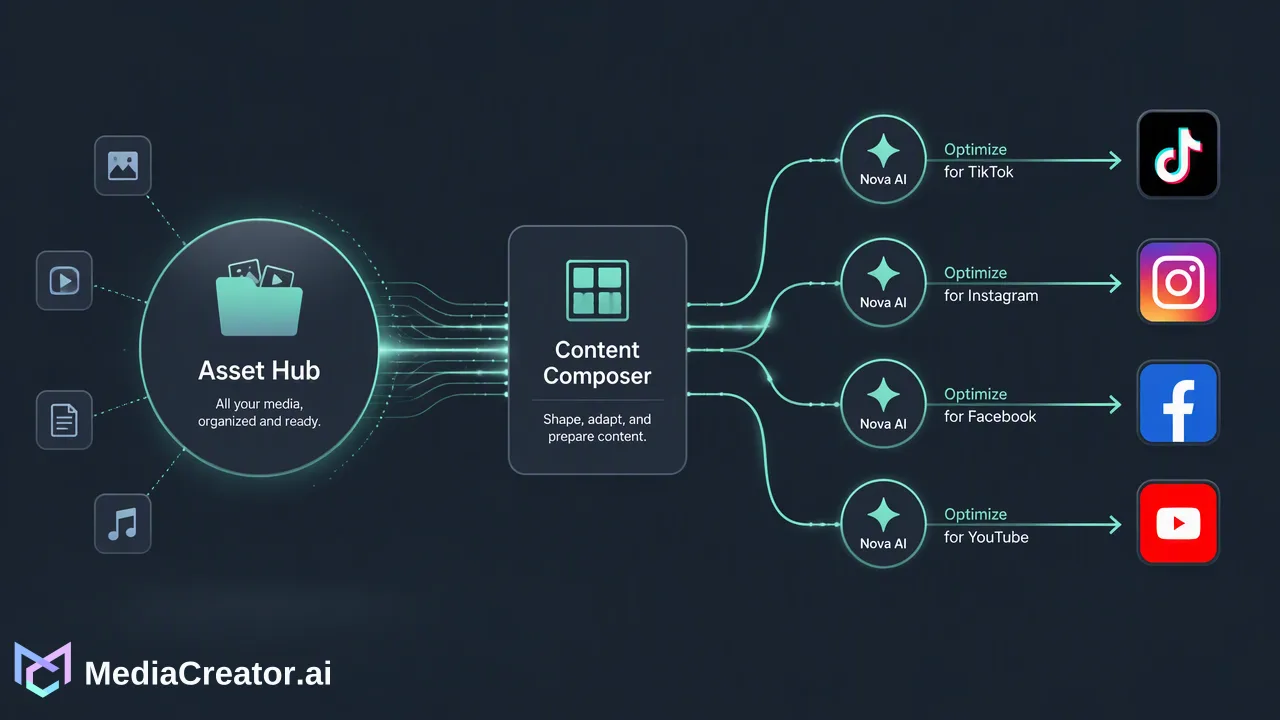
Learn how centralizing social media assets helps multi-account teams reduce manual errors, maintain brand consistency, and streamline publishing workflows.
Managing hashtags and captions in scattered documents creates significant operational friction for multi-account teams. A centralized asset library—integrated directly into a unified publishing workflow—helps maintain brand consistency and reduces manual copy-paste errors. By moving away from fragmented notes, organizations can manage multiple accounts and adapt content for TikTok, Instagram, Facebook, and YouTube from a single web-based dashboard. This approach supports faster drafting and provides a single source of truth for social media assets.
The Hidden Cost of Fragmented Asset Management
Many organizations begin by storing hashtags, standard captions, and media links in disconnected spreadsheets, personal notes, or text documents. While this ad-hoc method functions for a single account, it quickly becomes an operational bottleneck for agencies and small teams handling multiple brand profiles. Searching for the correct hashtag group across different files requires constant context switching. This manual process introduces a high risk of copy-paste errors, formatting mistakes, and inconsistent brand messaging. When team members rely on outdated local documents rather than a centralized repository, campaigns often suffer from misaligned messaging or missing promotional tags. Furthermore, fragmented asset management complicates onboarding and collaboration. If a social media manager is unavailable, other team members struggle to locate the approved captions or platform-specific tags needed to maintain the publishing schedule. Transitioning away from these scattered notes is a necessary step for teams looking to scale their social media operations efficiently.
Why Centralization Supports Scaling
Centralizing social media assets into a single, accessible library helps teams standardize their workflows and improve overall consistency. A unified repository helps organizations group hashtags and captions by specific campaigns, brands, or target platforms. Instead of manually typing or searching for repetitive text, teams can retrieve approved asset groups directly within their content creation environment. This organization reduces the time spent on repetitive tasks and helps maintain a cohesive brand voice across all channels. A centralized approach also supports better campaign planning. When assets are stored in a structured library, teams can easily review which hashtag clusters perform best for specific content types and update them globally. This structure means that every team member has immediate access to the most current, approved messaging, significantly reducing the friction associated with multi-platform social media management.
Integrating Assets into the Publishing Workflow
To maximize efficiency, an asset library should be directly integrated into the team's publishing dashboard. MediaCreator.ai provides a web-based software environment for social media content management that connects these centralized assets to the actual posting workflow. Through OAuth 2.0 account connections, teams can manage multiple accounts per supported platform—specifically TikTok, Instagram, Facebook, and YouTube—without requiring password sharing or browser extensions. This unified Social Account Dashboard gives users access to their centralized hashtags and captions exactly where they draft their posts. When adapting content for different audiences, teams can utilize optional AI assistance. Features like Quick Caption generate platform-adapted copy based on uploaded media, helping teams tailor their centralized assets for specific network requirements. Additionally, Nova AI serves as a co-pilot for post drafting and workflow assistance, further reducing the manual effort required to format captions and hashtags for various platforms.
Maintaining Quality Control at Scale
Scaling social media output requires robust quality control mechanisms to verify that centralized assets are deployed correctly. While automation and AI assistance speed up the drafting process, human oversight remains a critical component of the workflow. MediaCreator.ai enforces a confirm-first behavior for AI write actions. Whenever a team uses optional AI features to generate or adapt captions, the platform displays a confirm card, requiring user review before the content can be published. This step helps organizations verify that the correct hashtags and brand messaging from the asset library have been applied accurately. Visual verification is equally important. The platform provides per-platform previews before publishing, helping teams see exactly how their captions, hashtags, and media will render on TikTok, Instagram, Facebook, or YouTube. Combined with a visual calendar that tracks posts across draft, queued, and published states, teams can maintain strict quality standards while managing a high volume of social media content.
FAQ
Why do teams move away from using notes for hashtag management?
Storing hashtags and captions in personal notes or disconnected documents creates an operational bottleneck. It requires constant context switching, increases the risk of manual copy-paste errors, and makes it difficult for multi-account teams to maintain consistent brand messaging across campaigns.
How does a centralized library support social media publishing speed?
A centralized asset library stores approved hashtags, captions, and media in one accessible location. By integrating this repository directly into a unified publishing dashboard, teams can retrieve and apply assets without searching through external files, significantly reducing the time spent on repetitive formatting tasks.
Can teams adapt the same caption for different social media platforms?
Yes, teams can adapt core messaging for different networks. Using web-based platforms like MediaCreator.ai, organizations can manage multiple accounts and utilize optional tools like Quick Caption to generate platform-adapted copy based on uploaded media for TikTok, Instagram, Facebook, and YouTube. All AI write actions require user confirmation before publishing to support quality control.
Get Started with MediaCreator.ai
Discover the power of AI-driven content creation
Related Articles
Continue learning with these related guides
The Data Storyteller’s Workflow: How to Turn Social Media Metrics into Actionable Insights
Learn a social media data storytelling workflow to turn raw analytics into strategic publishing decisions across TikTok, Instagram, Facebook, and YouTube.
BlogThe Collaborative Content Framework: How to Co-Author Social Campaigns with Creators
Discover how to co-author social campaigns with creators using a unified cross-platform publishing calendar and governed brand voice workflows.
Blog