
Building a Scalable Social Media Collaboration Workflow: A Guide for Modern Teams
Learn how to build a scalable social media team collaboration workflow with centralized dashboards, unified inboxes, and AI-assisted drafting.
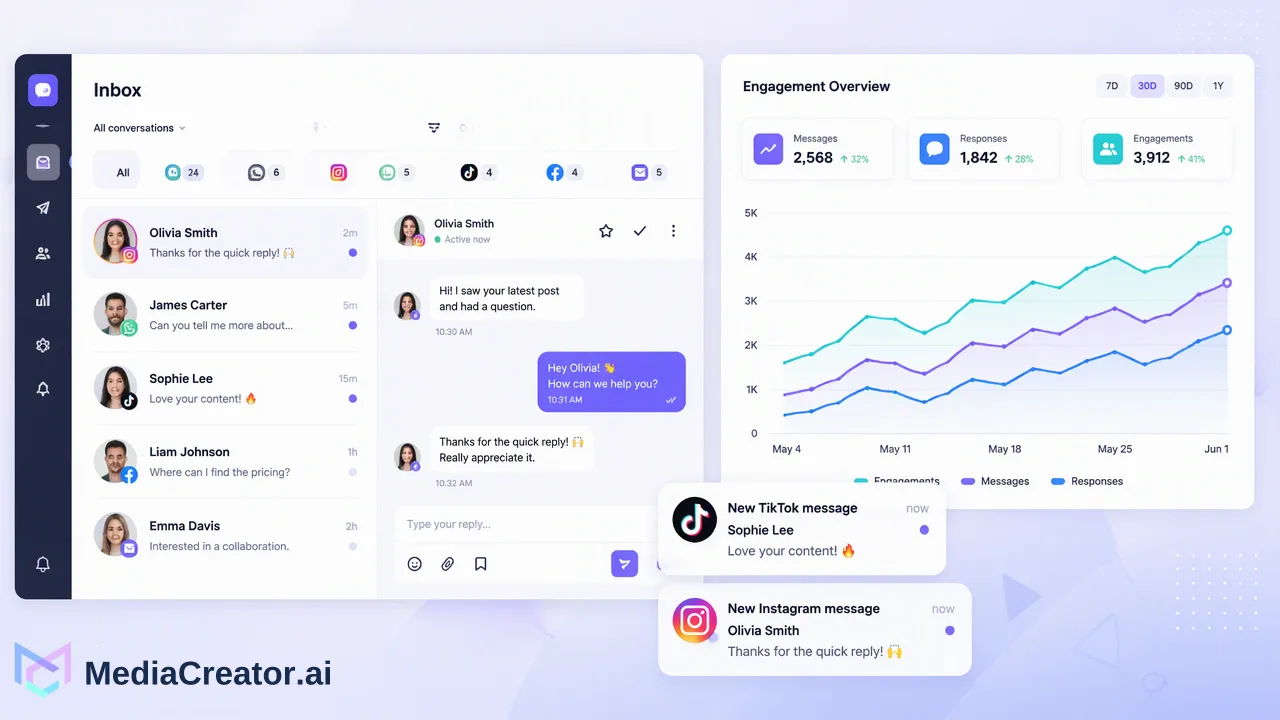
Transitioning from individual social media management to a centralized, cross-functional operational model helps teams maintain brand consistency. By integrating cross-platform publishing, unified engagement inboxes, and AI-assisted drafting with mandatory human oversight, organizations can streamline their social media team collaboration workflow.
A scalable social media team collaboration workflow requires moving away from fragmented, individual-led processes toward a centralized operational system. By integrating cross-platform publishing, unified engagement inboxes, and AI-assisted drafting with mandatory human oversight, teams can maintain brand consistency and improve operational efficiency. Centralized dashboards eliminate the need for password sharing and app switching, reducing operational friction. When organizations consolidate their planning, approval, and engagement tasks into a single environment, every post can be reviewed to align with strategic goals before it goes live. This shift from isolated effort to a unified, cross-functional model supports enterprise-grade governance and helps teams manage multiple accounts across platforms like TikTok, Instagram, Facebook, and YouTube without losing control of the brand voice.
The Shift to Team-Based Social Operations
Managing social media accounts through individual, disconnected efforts often leads to operational bottlenecks and inconsistent messaging. As organizations scale, relying on single users to draft, approve, and publish content across multiple platforms creates visibility gaps. A centralized social media team collaboration workflow addresses these challenges by bringing all stakeholders into a single operational framework. Transitioning to team-based operations requires clear visibility into the status of every piece of content. When teams use a shared publishing calendar, they can track posts through draft, queued, and published states. This transparency helps marketing leads and agency teams coordinate campaigns without relying on external spreadsheets or fragmented communication channels. By centralizing the workflow, organizations can support brand voice consistency and maintain a unified presence across all active channels. Furthermore, a unified approach supports cross-functional collaboration. Content creators can draft posts, while managers review and approve them within the same environment. This structured visibility helps teams compose a post once, adapt it for each specific platform, and preview exactly how it will render before scheduling. Moving away from isolated management toward a collaborative model provides the infrastructure necessary for scalable social media operations.
Centralizing Planning and Approval
Effective governance requires a unified dashboard where teams can manage multiple social profiles without compromising security. Traditional workflows often involve sharing credentials or relying on browser extensions, which introduces unnecessary risk and complicates access management. A modern social media team collaboration workflow utilizes secure OAuth 2.0 connections to link accounts, allowing teams to manage TikTok, Instagram, Facebook, and YouTube profiles from one central location without password sharing. Within this centralized environment, visual calendars provide essential transparency for team-wide content planning. A shared calendar allows all team members to see exactly what is scheduled, when it will go live, and which platform it targets. This level of organization supports complex approval workflows, as managers can review queued content and make adjustments before publication. The ability to manage several accounts per platform from a single dashboard also reduces the manual switching that slows down daily operations. Teams can organize their content strategy holistically, adapting a single core message to fit the specific formats and audience expectations of different networks. By centralizing both the planning and approval stages, organizations establish a reliable pipeline that supports consistent, high-quality output across all connected social channels.
Integrating AI Without Sacrificing Brand Voice
Artificial intelligence offers significant efficiency gains for content creation, but it must be integrated carefully to maintain authenticity. In a collaborative environment, AI tools should support human creativity rather than replace strategic oversight. A scalable social media team collaboration workflow incorporates AI assistance while enforcing strict governance to ensure all generated content meets established brand standards. Platforms like MediaCreator.ai provide optional AI features, such as Nova AI, Quick Caption, and Content Studio, to assist with drafting copy and generating media. However, to prevent off-brand messaging, these tools utilize confirm-first workflows. Any AI write action requires a manual confirm card before the content can be published. This mandatory human-in-the-loop confirmation ensures that team members review, edit, and approve all AI-generated drafts, keeping the final output aligned with the organization's strategic goals. To further support consistency, teams can utilize features that store a reusable brand voice. By defining and saving the specific tone and style of the organization, AI-drafted copy remains consistent across different campaigns and platforms. Quick Caption can generate platform-adapted copy from uploaded media, while Content Studio assists with image and video generation, all while adhering to the saved brand voice. This structured integration of AI helps teams scale their content production without sacrificing the unique identity of their brand.
Closing the Loop: Engagement and Analytics
Publishing content is only one part of a comprehensive social media strategy; managing audience interactions and measuring performance are equally critical. A complete social media team collaboration workflow integrates engagement and analytics into the daily operational loop, allowing teams to respond efficiently and refine their future strategies based on concrete data. Managing interactions across multiple platforms can be overwhelming when handled individually. A unified social inbox solves this by collecting comments, direct messages, and @mentions from all connected accounts into one centralized location. This consolidation allows team members to review and reply to audience engagement without logging into separate native applications. By streamlining the reply workflow, organizations can maintain a responsive and professional presence across TikTok, Instagram, Facebook, and YouTube. Beyond engagement, performance analytics play a vital role in shaping future content. Teams can review per-account and per-post performance directly within the web app to understand what resonates with their audience. This data informs posting schedule planning, supported by best-time recommendations that help optimize visibility. By closing the loop between publishing, engagement, and analysis, teams can continuously improve their social media operations, ensuring that every campaign is more effective than the last.
FAQ
How do teams maintain brand consistency across multiple social platforms?
Teams maintain brand consistency by utilizing a centralized social media team collaboration workflow that includes shared visual calendars and unified dashboards. By composing a post once and adapting it per platform, teams can preview how each network will render the content. Additionally, storing a reusable brand voice ensures that both human-written and AI-drafted copy align with the organization's established tone.
What is the benefit of a unified social media inbox for teams?
A unified social inbox collects comments, direct messages, and @mentions from connected accounts—such as TikTok, Instagram, Facebook, and YouTube—into one central location. This consolidation helps teams manage engagement efficiently without switching between different native applications, streamlining the review and reply workflow for faster, more coordinated audience interactions.
How can AI be safely integrated into a team's content workflow?
AI can be safely integrated by enforcing human-in-the-loop confirmation processes. In platforms like MediaCreator.ai, optional AI features such as Nova AI and Quick Caption require a manual confirm card before any AI write action is published. This ensures that AI tools support the drafting process while team members retain full control over final approvals and brand alignment.
How does centralized planning improve social media operations?
Centralized planning improves operations by providing clear visibility into draft, queued, and published states on a shared visual calendar. It allows multiple stakeholders to collaborate on content strategy without relying on fragmented spreadsheets. Secure OAuth 2.0 connections also enable multi-account management without the security risks associated with password sharing.
Get Started with MediaCreator.ai
Discover the power of AI-driven content creation
Related Articles
Continue learning with these related guides
How to Optimize Your Social Content for AI Search Visibility
Learn how to build an AI search optimization strategy using creator-led social content, unified workflows, and consistent brand messaging across platforms.
BlogHow to Build a Social Listening Workflow for Lead Generation
Learn how to build a social listening lead generation workflow. Discover how to detect signals, qualify intent, and route prospects to your CRM effectively.
Blog