
Mapping Creator Briefs to Conversion Paths: A Workflow Guide for Q4 Retail
Learn how to map creator briefs to Q4 retail conversion paths across marketplaces and DTC storefronts using structured multi-platform workflows.
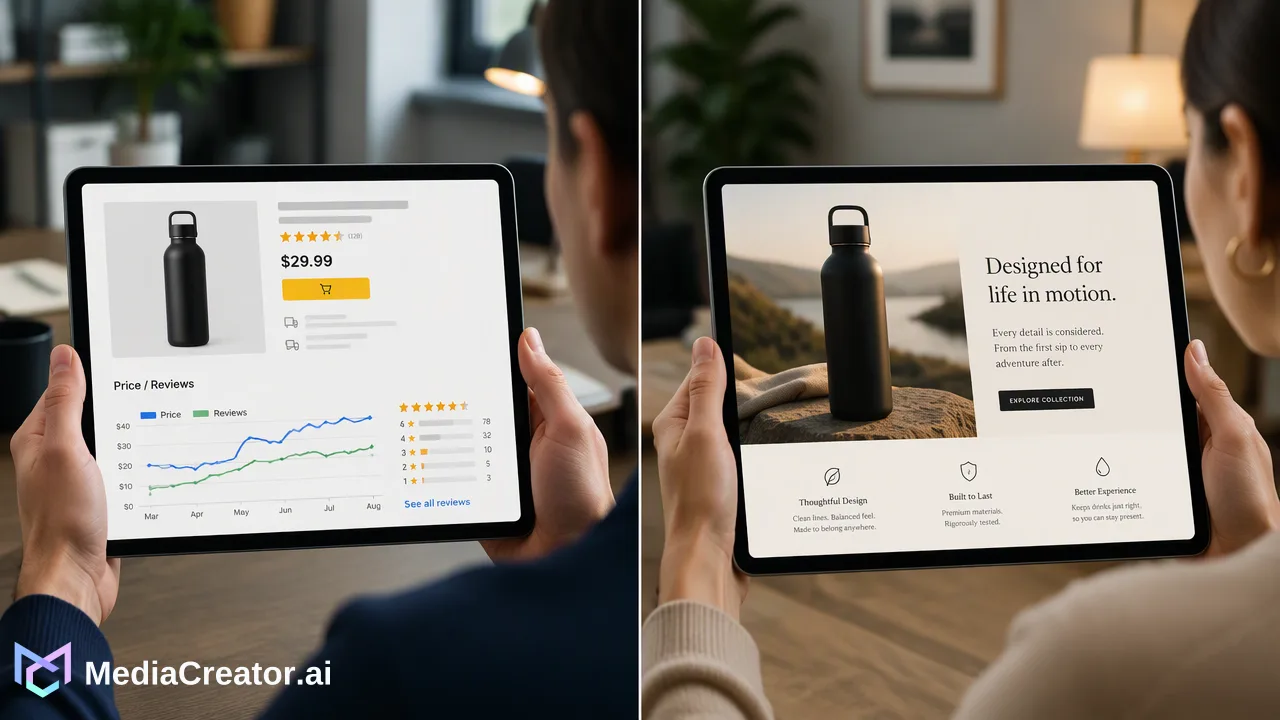
Aligning creator briefs with retail checkout paths is essential for Q4 retail success. Learn how to tailor content for marketplaces versus direct-to-consumer stores while managing cross-platform adaptation.
An effective Q4 social media conversion strategy requires aligning creator briefs with the specific checkout destination rather than treating every retail channel identically. Marketplaces such as Amazon demand proof-based assets, unboxing demonstrations, and review-focused hooks to overcome buyer hesitation, whereas direct-to-consumer (DTC) storefronts rely on brand storytelling and lifestyle context to justify consideration. Marketing teams can manage these divergent paths by establishing centralized brief parameters, utilizing reusable brand voice guidelines, and previewing platform-specific creative executions across TikTok, Instagram, Facebook, and YouTube prior to scheduling.
The Q4 Conversion Challenge: Why One Brief Fails
During the peak holiday shopping season, retail marketing teams frequently deploy influencer and creator campaigns across multiple social channels. However, attempting to use a uniform creator brief across all distribution points often creates friction along the customer journey. A creator video directing a consumer to an established retail marketplace serves an entirely different function than an asset pointing to an independent DTC brand portal. A shopper arriving on a high-volume marketplace is typically search-driven, price-conscious, and evaluating competing listings side by side. By contrast, a visitor directed to a DTC storefront expects a cohesive brand narrative, curated product detail, and distinct value propositions. When creator briefs fail to specify the destination environment, creators often default to generic lifestyle messaging that fails to provide the critical trust signals shoppers need at checkout. Developing a high-performing social media conversion strategy means recognizing that social assets do not operate in a vacuum. Every brief must map back to the mechanics of the conversion path, equipping creators with context on where traffic lands, what friction points exist on that page, and what specific calls to action will support consumer follow-through.
Adapting Content Requirements: Marketplaces vs. DTC
To bridge the gap between social discovery and purchase, retail teams must construct briefs that reflect the unique requirements of their distribution channels. Marketplaces and DTC storefronts require fundamentally different creative inputs. | Retail Path | Shopper Mindset | Primary Content Needs | Call-to-Action Focus | | :--- | :--- | :--- | :--- | | Marketplaces (e.g., Amazon) | Skeptical, comparison-oriented, efficiency-focused | Review summaries, unboxings, tangible proof of quality, problem-solution demos | Search terms, storefront link references, prime badge awareness | | Direct-to-Consumer (DTC) | Brand-focused, exploratory, relationship-driven | Origin stories, detailed lifestyle integration, collection overviews, bundle values | Exclusive site codes, link-in-bio clicks, limited seasonal editions | For marketplace conversion paths, creator briefs should explicitly ask for proof-based creative. Content should highlight concrete product utility, unpack real-world use cases, and address common customer concerns upfront. Because marketplace visitors frequently cross-check reviews before buying, content that preemptively addresses potential hesitation can support purchase decisions. For DTC conversion paths, briefs should emphasize emotional resonance and brand identity. DTC purchases often involve higher price points or unique items where customers need a clear reason to purchase directly from the brand. Briefs should guide creators toward conveying brand differentiation, highlighting bespoke packaging, or explaining the benefits of direct ordering.
Streamlining the Workflow: From Brief to Published Post
Executing tailored campaigns across various channels can create substantial operational overhead for marketing teams. Coordinating creative assets across TikTok, Instagram, Facebook, and YouTube requires an organized workflow to ensure each asset reaches the calendar with correct platform formatting and destination-specific messaging. Using web-based management platforms like MediaCreator.ai helps teams streamline this multi-channel execution. Instead of manually re-authoring copy across disparate tools, campaign managers can adapt assets systematically:
- Establish Brand Consistency: By storing baseline voice guidelines in Brand Voice, teams can generate or refine platform-tailored copy using optional Quick Caption tools while maintaining an established brand tone across all retail promotions. * Platform-Specific Optimization: Cross-platform publishing allows teams to compose campaign copy once, adjust it for each network's constraints, and verify how captions and tags render through per-platform previews before scheduling. * Controlled AI Assistance: When using optional AI creation tools to draft supplementary assets or captions, every action presents a confirm card prior to publishing, ensuring that human oversight remains central to the approval workflow. * Unified Account Management: Social teams can connect multiple profiles per platform over secure OAuth 2.0 without browser extensions or password sharing, keeping campaign execution centralized across brands and regional storefronts.
Maintaining Consistency in the Path to Purchase
Social media content serves as the opening chapter of the conversion journey, not the final destination. A disconnect between the tone of a creator's post and the reality of the landing page introduces friction that can disrupt customer follow-through. To safeguard campaign continuity throughout Q4, marketing teams must audit the full path to purchase:
- Message Continuity: The hooks and claims emphasized in creator videos must match the headline copy on the destination product detail page or storefront collection. 2. Offer Alignment: If a creator mentions a specific promotional bundle or holiday value, that exact offer must be immediately visible upon landing, minimizing navigation friction. 3. Visual Organization: Managing the release schedule using a visual publishing calendar helps social teams align organic creator amplification with inventory availability, promotional start dates, and paid campaigns. By systematically coordinating creator brief guidelines with checkout-specific expectations, retail organizations can establish a cohesive experience from initial feed impression to final order confirmation.
FAQ
How can teams ensure creator briefs remain consistent across different platforms?
Teams maintain consistency across platforms by establishing clear core parameters in the initial brief while allowing channel-specific creative adjustments. Storing standardized tone guidelines within tools like MediaCreator.ai Brand Voice allows teams to draft and adapt copy without losing their established voice. Reviewing per-platform previews before scheduling further confirms that captions, aspect ratios, and retail callouts fit each network's native interface.
What is the best way to adapt content for different retail checkout experiences?
The most effective approach is to separate proof requirements based on destination. For marketplace destinations, briefs should instruct creators to highlight specific functional capabilities, package contents, and customer validation signals. For DTC destinations, briefs should focus on brand values, exclusive bundles, and visual storytelling. Teams can then take primary creative assets, draft tailored captions to match each retail path, and inspect the confirm card before queuing posts.
How can organizations manage multiple social accounts during high-volume retail campaigns?
Organizations managing multi-brand or regional campaigns can connect accounts across TikTok, Instagram, Facebook, and YouTube via OAuth 2.0 without sharing passwords or using browser extensions. Using a centralized cross-platform calendar allows campaign operators to organize drafts, queued posts, and published content across multiple connected accounts in a single workspace.
Learn More
Choose the product information that fits the next step in your workflow.
Get Started with MediaCreator.ai
Discover the power of AI-driven content creation
Related Articles
Continue learning with these related guides
The Collaborative Content Framework: How to Co-Author Social Campaigns with Creators
Discover how to co-author social campaigns with creators using a unified cross-platform publishing calendar and governed brand voice workflows.
BlogBuilding an Employee-Generated Content Program: A Workflow Guide for Modern Brands
Build a structured employee-generated content workflow. Learn how to align internal creators with clear briefs, review calendars, and unified social inboxes.
Blog