
The Collaborative Content Framework: How to Co-Author Social Campaigns with Creators
Discover how to co-author social campaigns with creators using a unified cross-platform publishing calendar and governed brand voice workflows.
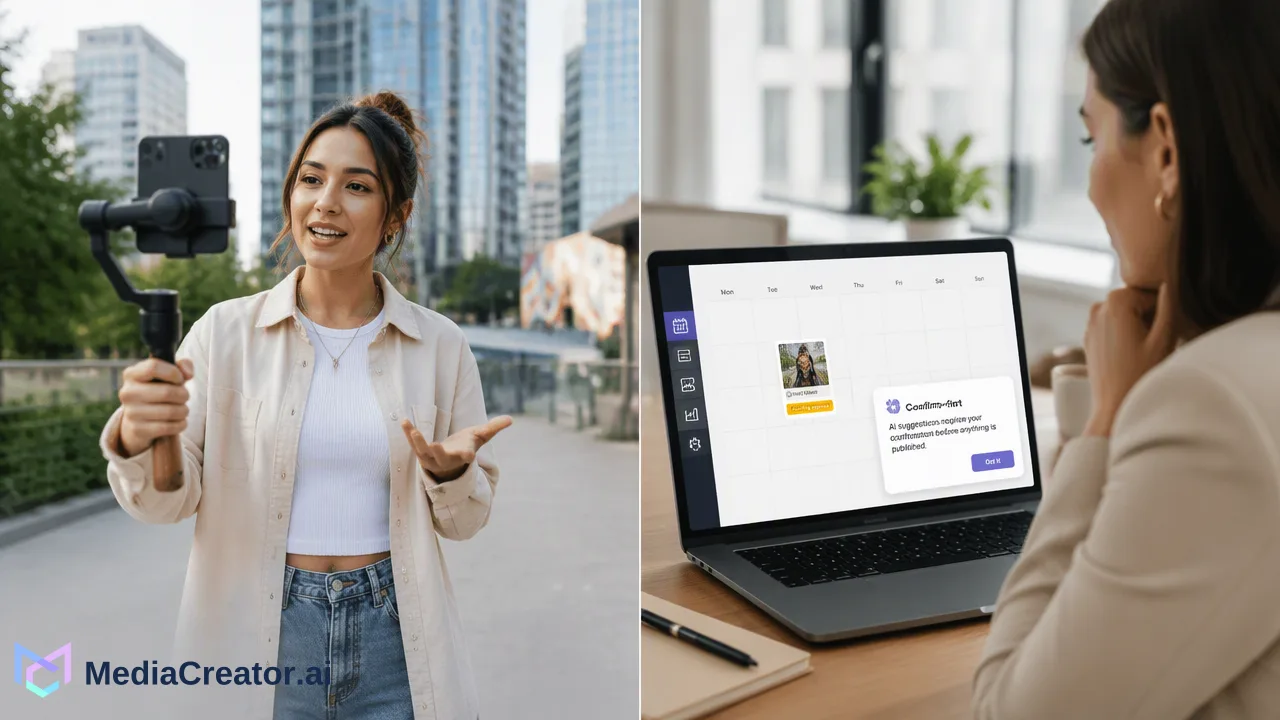
Learn how modern marketing teams build a structured creator collaboration workflow to co-author real-time social campaigns across TikTok, Instagram, Facebook, and YouTube.
Modern brand marketing is shifting from exclusive institutional coverage to a collaborative model where brands and creators co-author content in real time. To implement this framework effectively, marketing teams must move beyond passive sponsorships and organize creator-generated assets inside a unified cross-platform publishing calendar. Centralizing asset review, per-platform adaptations, and post scheduling across TikTok, Instagram, Facebook, and YouTube helps organizations preserve narrative consistency while enabling agile, creator-led storytelling.
The Shift to Creator-Led Storytelling
Event marketing and cultural activations historically relied on top-down institutional broadcasts. Brands deployed centralized production teams to capture polished assets, releasing them through tightly controlled corporate accounts days after an event concluded. Audience habits have fundamentally reshaped this dynamic. Real-time creator coverage now operates on par with traditional media placements, delivering rapid, on-the-ground perspectives that audiences actively seek out during live activations. Instead of relying solely on proprietary feeds, organizations increasingly treat creators as primary correspondents. This evolution requires marketing teams to transition from isolated press releases to distributed storytelling, where multiple creator voices capture simultaneous perspectives of a brand experience.
From Sponsorship to Co-Authoring: Designing Activations
Traditional influencer sponsorships often treat creators as passive distribution channels, providing rigid scripts or pre-packaged assets that feel detached from the creator's natural content style. In contrast, co-authoring establishes a shared creative framework where brand teams and independent partners collaborate on narrative development. Designing activations for creator amplification requires structuring physical or digital environments that provide natural creative hooks. Instead of mandating identical talking points, brands establish shared narrative pillars and allow creators to produce native formats in real time. This operational shift demands structured coordination: teams must align on delivery timelines, draft review stages, and platform specifications without stalling creative velocity during critical campaign windows.
Managing an Integrated Creator Collaboration Workflow
Co-authoring campaigns across multiple creators introduces significant operational complexity. Fragmented workflows—where draft files, feedback threads, and posting schedules sit in disconnected spreadsheets and cloud folders—lead to delayed approvals and disjointed posting times. A structured creator collaboration workflow centers on a shared dashboard connected to primary distribution channels. MediaCreator.ai allows organizations to connect TikTok, Instagram, Facebook, and YouTube accounts securely via OAuth 2.0, eliminating password sharing or insecure browser extensions. | Workflow Stage | Fragmented Multi-Tool Model | Unified MediaCreator.ai Workflow | | :--- | :--- | :--- | | Account Access | Shared login credentials across staff | Secure OAuth 2.0 multi-account connection | | Asset Review | Disconnected cloud folders and email threads | Centralized media handling with per-platform previews | | Scheduling | Manual native uploads per platform | Visual publishing calendar (draft, queued, published) | | Engagement | Switching between native mobile applications | Unified inbox for comments, DMs, and @mentions | Using a cross-platform publishing calendar, campaign managers can review creator assets, adapt copy for each channel, preview how content renders natively across platforms, and maintain visibility over draft, queued, and published statuses.
Maintaining Brand Consistency with Governed AI Assistance
Publishing high volumes of collaborative assets across several channels introduces the risk of fragmented messaging. While creator posts should retain their individual personality, brand-published adaptations and companion posts must adhere to internal communication guidelines. AI creation tools can support this workflow when paired with strict governance controls. Inside MediaCreator.ai, Brand Voice stores reusable tone profiles that guide assistive tools like Quick Caption, which generates platform-adapted copy from uploaded imagery and video. Content Studio provides supplementary media generation options when companion graphics are required for calendar scheduling. To prevent unvetted copy or unauthorized posts from going live, the platform implements a confirm-first model: all AI write actions present an explicit confirmation card that requires human review and approval before scheduling. This balance provides operational speed while ensuring that every co-authored campaign asset remains fully aligned with brand standards.
FAQ
How can teams integrate creator assets into a unified social calendar?
Teams can import creator-generated video and imagery into a centralized management platform like MediaCreator.ai, adapt the creative assets to specific aspect ratios or formats, and schedule them alongside internal assets on a visual calendar showing draft, queued, and published states.
What role does a unified social inbox play in collaborative campaigns?
Co-authored campaigns generate distributed engagement across accounts. A unified inbox consolidates incoming comments, direct messages, and @mentions from connected TikTok, Instagram, Facebook, and YouTube profiles into a single workspace, allowing team members to monitor and coordinate responses efficiently.
How does AI assist in maintaining brand voice during co-authoring?
AI drafting tools utilize stored Brand Voice tone settings to generate contextual copy matching defined guidelines. To preserve operational control, AI write actions require user review through an explicit confirmation card before any post is scheduled or published.
Learn More
Choose the product information that fits the next step in your workflow.
Get Started with MediaCreator.ai
Discover the power of AI-driven content creation
Related Articles
Continue learning with these related guides
Building an Employee-Generated Content Program: A Workflow Guide for Modern Brands
Build a structured employee-generated content workflow. Learn how to align internal creators with clear briefs, review calendars, and unified social inboxes.
BlogMapping Creator Briefs to Conversion Paths: A Workflow Guide for Q4 Retail
Learn how to map creator briefs to Q4 retail conversion paths across marketplaces and DTC storefronts using structured multi-platform workflows.
Blog