
The Full-Funnel Social Media Strategy: Mapping Content Formats to Business Goals
Learn how to build a full-funnel social media strategy by mapping short-form discovery and long-form consideration into a unified cross-platform workflow.
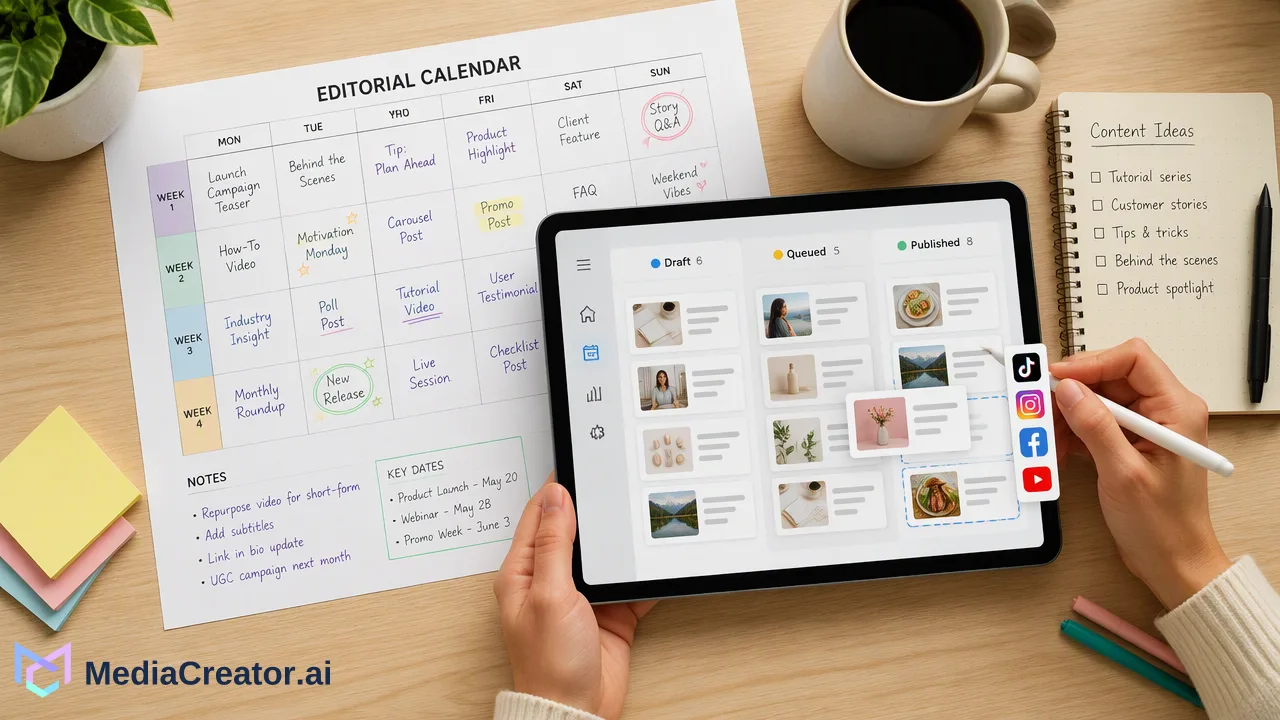
A full-funnel social media strategy connects short-form discovery with long-form consideration. Learn how to map video formats to audience stages and manage multi-platform publishing workflows.
A full-funnel social media strategy treats short-form and long-form content as an integrated ecosystem rather than disconnected creative experiments. In this framework, short-form video serves as an agile discovery engine that introduces brand touchpoints to prospective audiences at the top of the funnel. Conversely, long-form content delivers the technical depth, narrative context, and trust required to guide viewers through consideration and conversion. Executing this model across multiple networks requires coordinating production schedules, adapting creative assets to channel requirements, and managing distribution through a centralized, confirm-first workflow.
The Full-Funnel Content Ecosystem
Traditional social publishing often isolates assets by length, treating short social video and extended presentations as separate initiatives managed by different teams. A full-funnel social media strategy breaks down these silos, viewing each format as an interconnected step within a unified audience journey. Short-form formats excel at rapid discovery. Because platform recommendation algorithms surface vertical video to users based on real-time topical interest, short clips allow brands to reach prospective viewers outside their existing follower base. However, discovery alone rarely drives complex business decisions. Long-form video fills this structural gap by facilitating consideration. In longer assets, creators and organizations can unpack technical methodologies, demonstrate end-to-end workflows, and address nuanced evaluation questions that cannot fit into a sixty-second clip. Treating these formats as a connected ecosystem allows teams to guide viewers smoothly. When an audience member encounters an engaging top-of-funnel concept, a structured channel architecture makes relevant deep-dive assets immediately accessible, keeping engagement within the brand's verified ecosystem.
Mapping Content Formats to Funnel Stages
Aligning creative formats with specific operational milestones ensures that social publishing actively supports organizational objectives. Rather than producing content arbitrarily, teams can map specific media styles to precise stages of the viewer journey. | Funnel Stage | Strategic Objective | Primary Format | Typical Asset Focus | | :--- | :--- | :--- | :--- | | Top of Funnel (Attract) | Brand reach, initial problem awareness | Short-form vertical video (Shorts, Reels, TikTok) | Quick workflow tips, key takeaways, high-level industry context | | Middle of Funnel (Evaluate) | Technical consideration, solution exploration | Medium/long-form video, structured carousels | In-depth tutorials, feature walkthroughs, comparative discussions | | Bottom of Funnel (Decide) | Actionable conversion, onboarding | Extended video, detailed product demonstrations | Comprehensive guides, implementation steps, operational workflows | Platform environments reward publishers that maintain this multi-format presence. Audiences engage through different modalities depending on time of day, device type, and intent. By delivering both bite-sized overviews and comprehensive explanations across supported networks—including YouTube, Instagram, Facebook, and TikTok—organizations establish consistent visibility regardless of how an audience member enters the platform.
Executing Multi-Format Strategy with a Unified Workflow
Producing content across multiple formats introduces operational complexity. Short-form assets demand punchy text hooks and rapid pacing, while long-form uploads require structured descriptions, chapter milestones, and tailored metadata. Without centralized operations, teams face tool fragmentation and communication breakdowns. MediaCreator.ai addresses this operational challenge through an integrated management environment. Accounts across YouTube, TikTok, Facebook, and Instagram connect via standard OAuth 2.0 protocols, eliminating shared passwords and browser extensions while supporting multiple profiles per network. From the centralized social account dashboard, teams compose core concepts once and adapt them across target platforms. The cross-platform publishing calendar provides clear visibility into content pipelines, categorizing items into draft, queued, and published states. Furthermore, per-platform preview interfaces allow operators to review visual layouts, line breaks, and video framing prior to scheduling, ensuring each asset respects network-specific presentation standards.
Maintaining Quality Control and Brand Voice at Scale
As publishing volume expands across both long-form and short-form channels, maintaining tonal consistency becomes a critical governance task. Fragmented messaging weakens audience trust during the consideration phase. MediaCreator.ai incorporates dedicated editorial assistance to streamline preparation without sacrificing oversight. Using Brand Voice configurations, organizations define reusable brand guidelines so that AI-drafted captions remain aligned with organizational tone across all campaigns. Tools like Quick Caption generate platform-adapted copy directly from uploaded media assets, reducing repetitive formatting tasks. Crucially, quality control is maintained through a confirm-first model. Optional AI features such as Nova AI and Content Studio never publish autonomously; every generated draft or caption update presents an explicit confirmation card. This human-in-the-loop requirement guarantees that editors and social leads retain absolute authority over final copy, asset tagging, and scheduling before any post goes live.
FAQ
How can teams balance short-form and long-form content across an editorial calendar?
Teams can structure calendars by using short-form assets as discovery entry points that point toward deeper resources. For instance, short clips can highlight key concepts from an in-depth video or case breakdown. Scheduling these assets across visual states—draft, queued, and published—helps ensure an intentional rhythm between broad discovery touches and detailed educational releases.
Why is a unified management dashboard valuable for full-funnel social media execution?
Operating a full-funnel strategy across platforms like TikTok, Instagram, Facebook, and YouTube often introduces operational friction when managing standalone browser sessions or mobile apps. A unified dashboard connects profiles securely via OAuth 2.0 without password sharing, allowing teams to preview format adaptations, schedule posts, and monitor connected channels from one central location.
How does a confirm-first workflow support brand consistency across diverse formats?
When generating or drafting copy for multiple channels, automated suggestions can deviate from brand standards if published without oversight. A confirm-first mechanism presents an explicit review card for AI-assisted drafts, ensuring social managers inspect tone, context, and platform formatting before any post transitions to queued or published status.
Learn More
Choose the product information that fits the next step in your workflow.
Get Started with MediaCreator.ai
Discover the power of AI-driven content creation
Related Articles
Continue learning with these related guides
How to Integrate Boosted Reels into Your Social Media Publishing Workflow
Integrate boosted Instagram Reels into your social publishing workflow. Balance organic planning, eligibility, brand voice, and analytics.
BlogBeyond Scheduling: A Strategic Guide to Social Media Automation
Build an effective social media automation strategy. Learn how to combine unified publishing, AI drafting, and human oversight across social channels.
Blog