
Beyond Scheduling: A Strategic Guide to Social Media Automation
Build an effective social media automation strategy. Learn how to combine unified publishing, AI drafting, and human oversight across social channels.
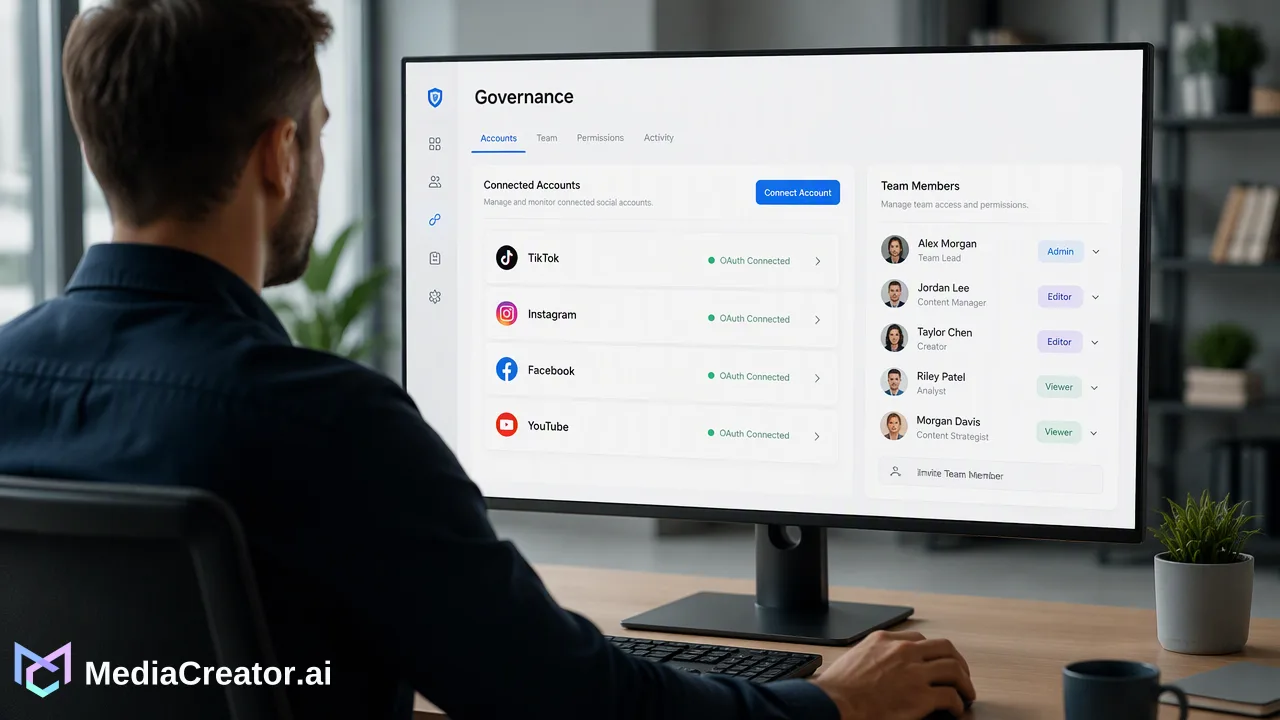
Discover how a modern social media automation strategy pairs software efficiency with human oversight across publishing, engagement, and AI-assisted workflows.
A social media automation strategy is a structured framework that pairs software efficiency with human oversight to manage high-volume, repetitive tasks across digital channels. Rather than treating automation as a hands-off publishing tool, high-performing organizations use it to support cross-network coordination, inbox organization, and assisted drafting, keeping human operators in control of creative direction, brand voice, and final approvals.
The Strategic Shift: Moving Beyond Basic Scheduling
For many organizations, operational social management initially means queuing posts on a basic digital calendar. While queue management provides distribution structure, relying strictly on post scheduling overlooks the broader demands of active digital presence. A mature social media automation strategy treats distribution as only one element of a connected workflow that also encompasses content composition, cross-network adaptation, audience monitoring, and inbound interaction management. Modern publishing requires teams to tailor messaging across networks while maintaining operational speed. In MediaCreator.ai, organizations coordinate their pipeline across supported platforms—TikTok, Instagram, Facebook, and YouTube—from a centralized workspace. Rather than copying assets manually into discrete native dashboards, teams compose a core message once, tailor the creative to individual network requirements, and review distinct per-platform previews before content enters the queue. | Capability Focus | Basic Social Scheduling | Comprehensive Automation Strategy | | :--- | :--- | :--- | | Scope | Time-based post dispatch | End-to-end content, inbox, and review workflows | | Platform Adaptation | Manual per-network reformatting | Unified drafting with native per-platform previews | | Inbound Messaging | Handled inside native network apps | Aggregated comments, mentions, and DMs in one inbox | | Review Controls | Limited queue adjustments | Visual states (draft, queued, published) and confirmation gates | By unifying these layers, automation reduces administrative overhead while preserving granular editorial control over every post.
Maintaining Brand Voice in an AI-Assisted Workflow
Generative technology can dramatically accelerate draft composition, but unguided generation introduces inconsistency and operational drift. Effective automated systems position artificial intelligence as an operational drafting assistant rather than an autonomous publisher. To preserve organization identity, automated workflows rely on structured baseline controls. MediaCreator.ai incorporates Brand Voice settings, which store organizational tone parameters to steer copy generation across campaigns. Content tools such as Quick Caption generate platform-adapted captions directly from uploaded media assets, while Content Studio assists in producing image and video assets for review. Crucially, drafting efficiency must not bypass editorial standards. MediaCreator.ai enforces a confirm-first policy: all AI write actions present a confirmation card that requires deliberate human review prior to publication. This safeguard ensures that team members inspect every generated caption, tag, or framing choice, preventing off-brand copy or factual inaccuracies from reaching audiences.
Governance, Oversight, and Avoiding Over-Automation
While automation brings speed to operational tasks, over-automation introduces tangible brand and account risks. Attempting to automate audience interactions through canned auto-comments, bulk interaction bots, or unmonitored messaging loops can damage brand reputation, confuse community members, and violate social network terms of service. Sustainable social strategies draw a clean boundary between programmatic organization and authentic human communication. Risk mitigation depends on governance tools that provide visibility across teams and external collaborators:
- Visual Lifecycle States: MediaCreator.ai organizes social posts across distinct draft, queued, and published stages on a visual calendar, ensuring unsanctioned material cannot deploy without passing verification steps. * Credential Protection: Accounts are linked using standard OAuth 2.0 protocols, eliminating password sharing across internal contributors or external contractors and removing the need for third-party browser extensions. * Performance and Timing Verification: Analytical dashboards surface per-post and per-account performance alongside posting-time recommendations, supporting informed calendar planning without delegating strategic decision-making entirely to algorithms. These safeguards establish clear accountability, ensuring automation accelerates administrative throughput without compromising operational safety.
Unified Engagement: The Foundation of Scalable Operations
Scaling social operations across multiple profiles often creates fragmented communication channels. When community managers must switch between disparate mobile apps and native portals, response latencies rise and incoming messages risk being missed. A unified management dashboard addresses this friction by aggregating inbound social signals into an organized operational hub. MediaCreator.ai provides a unified social inbox that collects comments, direct messages, and @mentions across connected TikTok, Instagram, Facebook, and YouTube profiles into a consolidated queue for review and response. Because multiple accounts per platform can be managed under one roof via secure OAuth connections, teams can centralize brand engagement across diverse client profiles or distinct business units. Team members triage customer questions, track discussions, and conduct deliberate, human-written replies from a single interface. Centralizing inbound traffic supports consistent response standards while giving leadership total operational visibility across all brand touchpoints.
FAQ
What is the difference between social media scheduling and automation?
Social media scheduling focuses narrowly on queueing posts for a specific publication date and time. Comprehensive automation expands beyond calendar management to encompass multi-channel drafting, unified inbox collation for comments and direct messages, performance analytics, and structured approval workflows.
How can teams maintain brand voice while using AI drafting tools?
Teams maintain brand consistency by establishing saved brand guidelines, such as MediaCreator.ai's Brand Voice setting, to anchor generated copy. Furthermore, keeping human oversight through confirm-first interfaces prevents unreviewed content from publishing directly to live social profiles.
What are the primary operational risks of over-automating social media engagement?
Over-automation, such as deploying unattended auto-replies or artificial engagement loops, risks damaging brand reputation, alienating audiences with out-of-context replies, and triggering platform policy violations. Safe workflows use automation to aggregate inbound messages into a centralized workspace while keeping actual replies human-led.
How does a unified social inbox improve team response efficiency?
A unified social inbox aggregates inbound comments, direct messages, and mentions across multiple profiles into a single review feed. This structure reduces manual application switching, standardizes triage across team members, and ensures customer inquiries receive deliberate attention without credential sharing.
Learn More
Choose the product information that fits the next step in your workflow.
Get Started with MediaCreator.ai
Discover the power of AI-driven content creation
Related Articles
Continue learning with these related guides
How to Integrate Boosted Reels into Your Social Media Publishing Workflow
Integrate boosted Instagram Reels into your social publishing workflow. Balance organic planning, eligibility, brand voice, and analytics.
BlogThe Full-Funnel Social Media Strategy: Mapping Content Formats to Business Goals
Learn how to build a full-funnel social media strategy by mapping short-form discovery and long-form consideration into a unified cross-platform workflow.
Blog