
Scaling Multi-Account Social Media Operations: A Workflow Guide for Enterprise Teams
Learn how enterprise teams scale multi-account social media management using centralized dashboards, unified inboxes, and human-led AI workflows.
Learn how enterprise teams scale multi-account social media management using centralized dashboards, unified inboxes, and human-led AI workflows.
Scaling multi-account social media management requires a centralized system that consolidates publishing, engagement, and analytics into a single workflow. By moving away from platform-specific applications to a unified dashboard, organizations can maintain brand consistency, streamline approval processes, and reduce the operational burnout associated with manual platform-switching. A centralized approach helps teams connect multiple profiles securely, aggregate incoming messages, and apply confirm-first AI workflows that support brand safety and compliance efforts before any content reaches the audience.
The Challenge of Fragmented Social Operations
Managing multiple accounts without a centralized system frequently leads to operational burnout and inconsistent brand messaging. When enterprise teams rely on native applications, they are forced into constant platform-switching to monitor different feeds, upload media, and check notifications. This fragmentation makes it difficult to maintain oversight across different regions and departments. Without a single source of truth, the risk of compliance errors increases, and teams may miss critical engagement opportunities scattered across isolated notifications. Moving to a unified multi-account social media management model helps organizations regain control over their publishing schedules and audience interactions. By consolidating these tasks, teams can focus on strategy rather than administrative overhead.
Establishing Centralized Governance
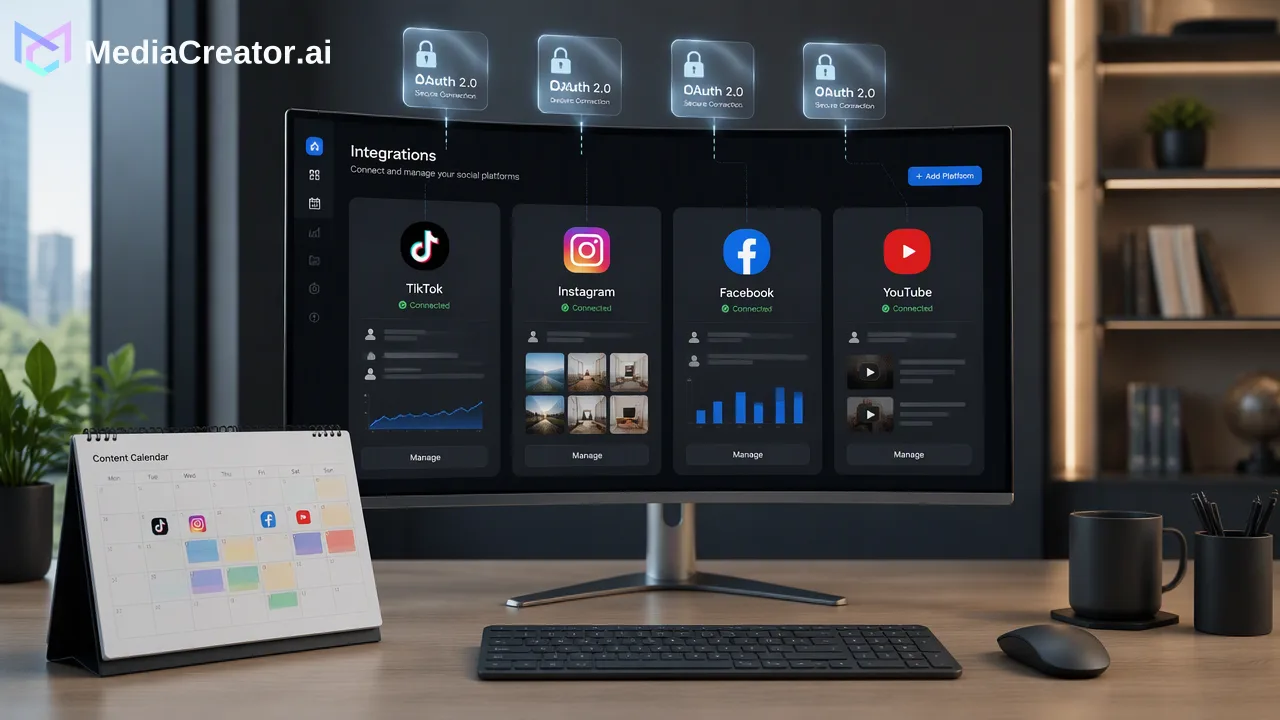
A foundational step in scaling operations is establishing centralized governance through a unified dashboard. MediaCreator.ai supports this by letting teams connect multiple accounts for TikTok, Instagram, Facebook, and YouTube. Instead of relying on vulnerable password-sharing practices or cumbersome browser extensions, organizations can authenticate these connections securely over OAuth 2.0. This approach helps administrators grant access without exposing underlying credentials. Once connected, teams can manage several accounts per platform from one interface. This consolidation extends to audience engagement through a unified social inbox. By aggregating comments, direct messages, and @mentions from all connected accounts into a single view, the unified inbox helps teams review and reply to interactions systematically. Keeping all communication streams in one place reduces the likelihood that a customer inquiry or brand mention will be overlooked during high-volume periods.
Maintaining Brand Consistency at Scale
Keeping a unified voice across different regions and teams requires structured publishing workflows. MediaCreator.ai helps teams compose a post once and adapt it for each specific platform. Because each network has different formatting requirements, operators can generate a per-platform preview to verify how the media and copy will render on TikTok versus Instagram or YouTube before anything goes live. To maintain organizational standards, teams can utilize reusable Brand Voice settings. This feature stores a specific tone so that any drafted copy remains consistent with the company's identity, regardless of which team member is preparing the post. Furthermore, a cross-platform visual calendar provides transparency across the entire organization. This calendar displays posts in draft, queued, and published states, giving managers a clear overview of the content pipeline. By visualizing the schedule, teams can coordinate multi-account social media management strategies effectively, helping distribute campaigns evenly and supporting the review of draft content before it moves to the queued state.
Integrating AI Safely into the Workflow
Artificial intelligence can accelerate content creation, but it requires human oversight to align with enterprise standards. In MediaCreator.ai, AI tools act as optional co-pilots rather than autonomous publishers. Features like Quick Caption help generate platform-adapted copy from uploaded media, while Content Studio assists in generating images and video for upcoming campaigns. Additionally, Nova AI provides chat-style workflow assistance for drafting posts and making content decisions. To mitigate brand safety risks and support compliance efforts, the platform enforces a confirm-first workflow. Any AI write action surfaces a confirm card, requiring a human operator to review, edit, and approve the drafted material before it is published or scheduled. This structure helps teams benefit from AI-assisted efficiency while maintaining strict editorial control over their multi-account social media management outputs. Human-in-the-loop processes support the goal of using AI as a drafting aid rather than a final decision-maker.
Consolidating Performance Data
Effective multi-account social media management relies on continuous measurement and optimization. Consolidating performance data into a single dashboard helps teams review analytics without exporting reports from individual native platforms. MediaCreator.ai provides unified analytics that give teams context for their historical performance across TikTok, Instagram, Facebook, and YouTube. Teams can review both per-account metrics to gauge overall channel health and per-post performance to understand which specific pieces of content resonate with the audience. By analyzing this consolidated data, organizations can refine their future strategies. The platform also offers best-time-to-post recommendations, which help teams optimize their scheduling when planning the visual calendar. Having analytics and publishing tools in the same environment reduces friction and supports data-informed decision-making for enterprise social operations.
FAQ
How can teams maintain brand voice consistency when using AI for content creation?
Organizations can use reusable Brand Voice settings that store a specific tone, helping AI-drafted copy stay consistent with organizational standards. Additionally, confirm-first workflows require human review before any AI-generated content is published.
What are the workflow benefits of using a unified inbox for multi-account management?
A unified inbox aggregates comments, direct messages, and @mentions from all connected accounts into one central view. This consolidation helps teams review and reply to audience interactions systematically, reducing the need to switch between different native applications.
How does a centralized dashboard support brand safety for enterprise teams?
Centralized dashboards provide transparency through visual calendars that display draft, queued, and published states. They also support brand safety by routing all AI write actions through a confirm card, maintaining human oversight before content reaches the public.
Why is OAuth 2.0 preferred over password sharing for social media management?
Connecting accounts via OAuth 2.0 helps platforms authenticate securely without requiring teams to share raw passwords or install browser extensions. This method supports better access control when managing multiple accounts per platform.
Get Started with MediaCreator.ai
Discover the power of AI-driven content creation
Related Articles
Continue learning with these related guides
How to Build a Creator-Led Workflow for AI Search Optimization
Discover how to build a creator-led AI search optimization workflow. Align social media management with SEO goals to support answer engine visibility.
BlogHow to Build a Social Listening Workflow for High-Intent Lead Generation
Learn how to build a proactive social listening lead generation workflow. Discover how a unified inbox helps teams identify and route high-intent signals.
Blog