
Breaking Down Marketing Silos: A Unified Workflow Guide for Social Media Teams
Break down social media marketing silos. Learn how unified calendars, asset libraries, and centralized management streamline cross-platform workflows.
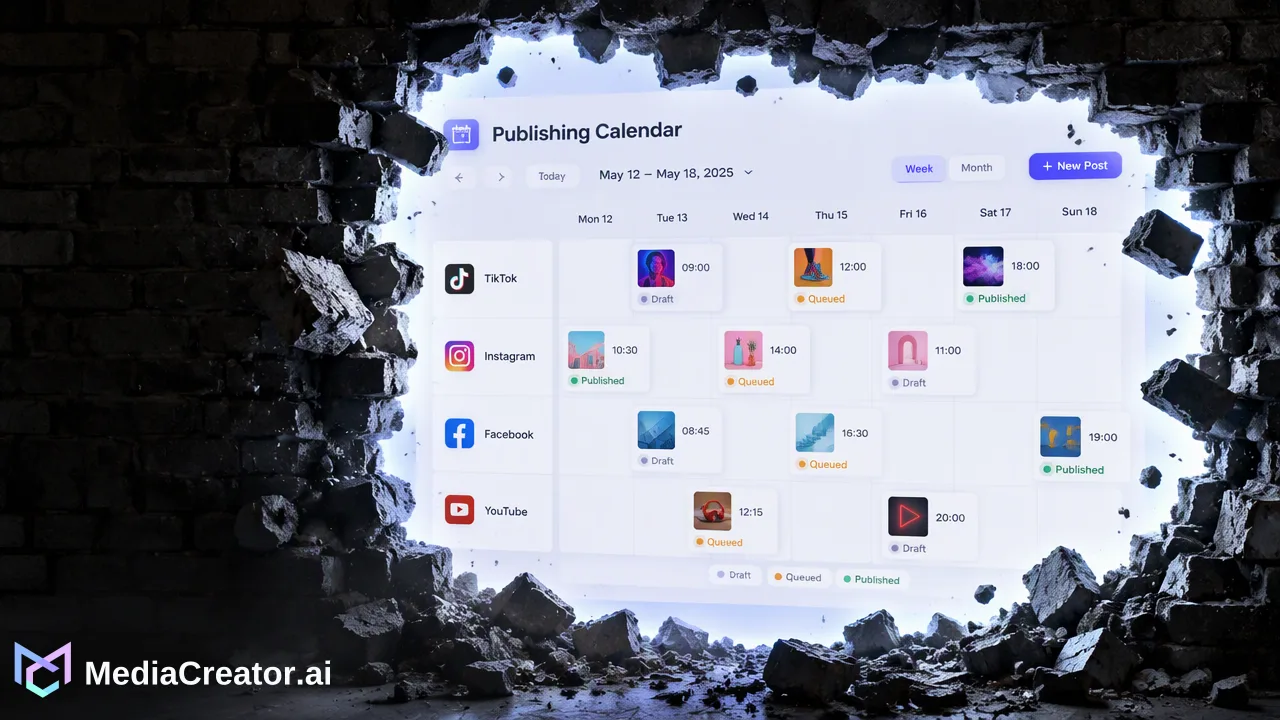
Marketing silos create operational friction, inconsistent messaging, and fragmented audience data. This guide outlines how social media teams can unify workflows across TikTok, Instagram, Facebook, and YouTube using shared calendars, centralized asset management, and unified inboxes.
Marketing silos occur when internal teams operate in isolation, blocking the flow of creative assets, audience feedback, and campaign schedules across departments. To break down social media marketing silos, organizations must establish a single operational source of truth. By centralizing management across TikTok, Instagram, Facebook, and YouTube—specifically through shared cross-platform publishing calendars, centralized asset libraries, and unified engagement inboxes—teams can align organic and paid efforts, maintain consistent brand messaging, and eliminate the duplicated work caused by disconnected communication channels.
The Hidden Costs of Marketing Silos
Marketing silos form when team structures or tool stacks restrict data, strategic planning, and creative assets to isolated groups. In social media operations, this structural division frequently separates organic social teams, paid media buyers, content creators, and frontline customer service representatives. When social teams operate inside departmental silos, operational costs accumulate across three primary areas:
- Duplicated Production Efforts: Without unified visibility, creative teams often produce redundant graphics, videos, or copy for separate initiatives, unaware that relevant assets already exist in another department's folder. * Fragmented Customer Experience: Disconnected teams manage community interactions inconsistently. When audience inquiries, comments, or direct messages are handled without cross-functional context, brand messaging becomes disjointed across channels. * Misaligned Scheduling: When paid campaign managers and organic social managers maintain separate editorial calendars, audiences may receive conflicting calls to action or overlapping announcements across networks like TikTok, Instagram, Facebook, and YouTube.
Identifying Common Silo Types in Social Operations
To fix organizational divisions, social media leads must diagnose where functional walls exist within their current operating model. Most social media marketing silos manifest across four distinct departmental disciplines:
| Operational Discipline | Typical Siloed Behavior | Workflow Friction Point |
|---|---|---|
| Content Creation | Designers and copywriters work from static briefs without real-time distribution feedback. | Assets require extensive rework to fit technical aspect ratios or platform nuances. |
| Paid Social Advertising | Growth marketers run paid campaigns without visibility into organic post timing or themes. | Overlapping messaging competes for the same audience segments. |
| Organic Social Management | Community managers publish updates without clear awareness of paid promotions or broader brand initiatives. | Missed opportunities to support live corporate campaigns or partner activations. |
| Customer Support | Support teams monitor standalone help desks while community questions sit unaddressed in social comments or direct messages. | Delayed response times and unresolved customer inquiries on public channels. |
| Recognizing these specific operational boundaries enables teams to replace ad-hoc file handoffs and manual status meetings with integrated, structured workflows. |
Building Bridges: Strategies for Unified Workflows
Dismantling silos requires structured handoffs, shared visibility, and centralized asset storage rather than simply increasing the volume of team meetings. Marketing organizations can implement three foundational bridges:
1. Centralized Publishing Calendars
Replace departmental spreadsheets with a shared visual publishing calendar. A unified calendar provides full transparency by displaying posts in draft, queued, and published states. When creative leads, copywriters, and campaign managers can view scheduled content across TikTok, Instagram, Facebook, and YouTube in a single interface, cross-functional dependencies become immediately apparent. ### 2. Standardized Handoff and Approval Processes Establish clear content stage definitions so that assets move predictably from concept to live distribution. In integrated environments, content moves from initial drafting to tailored platform adaptations, followed by a dedicated review stage. Ensuring team members can preview post formatting for each network helps catch layout, copy, or aspect ratio errors prior to publication. ### 3. Integrated Asset Libraries and Brand Voice Guidelines Fragmented teams often struggle with tone drift when multiple contributors draft content. Storing pre-approved media assets alongside established Brand Voice guidelines ensures that everyone—from junior community coordinators to freelance contributors—adheres to identical brand parameters.
Centralizing Social Management with MediaCreator.ai
MediaCreator.ai provides a web-based social media management platform engineered to support collaborative workflows for creators, small teams, studios, agencies, and brand businesses. By consolidating multi-account administration, asset scheduling, and community interactions, the platform directly addresses the root causes of marketing silos. ### Secure Multi-Account Access Without Password Sharing Connecting social channels traditionally created security vulnerabilities and administrative bottlenecks. MediaCreator.ai connects accounts across TikTok, Instagram, Facebook, and YouTube using OAuth 2.0. This eliminates the need for shared passwords or third-party browser extensions. Teams can manage multiple accounts per platform within a single dashboard, allowing managers and collaborators to work within unified parameters. ### Cross-Platform Planning and Platform-Specific Adaptation MediaCreator.ai's cross-platform publishing calendar enables teams to compose a post once, adapt copy and media for each specific platform, and preview rendering before scheduling. Posts transition clearly across draft, queued, and published states, giving content creators, paid specialists, and brand managers complete oversight over upcoming distribution schedules. ### Consolidated Engagement Management Customer interactions often fall through the cracks when support and social teams check native apps separately. The MediaCreator.ai unified inbox aggregates incoming comments, direct messages, and @mentions from connected accounts into one central queue. This ensures that community management teams can review, triage, and reply to community interactions efficiently without switching platforms. ### Governed AI Creation and Brand Integrity To speed up production without compromising tone, MediaCreator.ai includes optional AI assistance features such as Content Studio for image generation, Quick Caption for platform-tailored copy, and Nova AI. To prevent accidental publishing or tone discrepancies, Brand Voice settings maintain a standardized writing style across drafted text, and all AI write actions present a confirm card for human verification before scheduling or publishing.
FAQ
How do marketing silos affect social media performance?
Marketing silos isolate performance observations, creative assets, and incoming messages within individual teams or channel specialists. This isolation frequently results in duplicated content creation, mismatched campaign schedules between paid and organic channels, and delayed responses to community inquiries across platforms.
What is the first step in unifying a fragmented social media team?
The initial step is consolidating operational visibility into a shared environment. Connecting brand accounts over direct OAuth connections into a central dashboard allows all contributors to review draft, queued, and published posts on one calendar, removing the need for fragmented spreadsheets or disconnected native platform logins.
How can centralized tools improve brand consistency?
Centralized tools enforce standardized guidelines across all social channels. In platforms like MediaCreator.ai, Brand Voice settings save a defined organizational tone for drafting copy, while per-platform previews and confirm-card review steps ensure that creative adaptations match brand standards before publishing.
Learn More
Choose the product information that fits the next step in your workflow.
Get Started with MediaCreator.ai
Discover the power of AI-driven content creation
Related Articles
Continue learning with these related guides
How to Integrate Boosted Reels into Your Social Media Publishing Workflow
Integrate boosted Instagram Reels into your social publishing workflow. Balance organic planning, eligibility, brand voice, and analytics.
BlogThe Full-Funnel Social Media Strategy: Mapping Content Formats to Business Goals
Learn how to build a full-funnel social media strategy by mapping short-form discovery and long-form consideration into a unified cross-platform workflow.
Blog