
Scaling Social Media Content: A Workflow Guide for Enterprise Teams
Learn how to scale your social media content workflow using a unified dashboard, secure account connections, and human-led AI assistance.
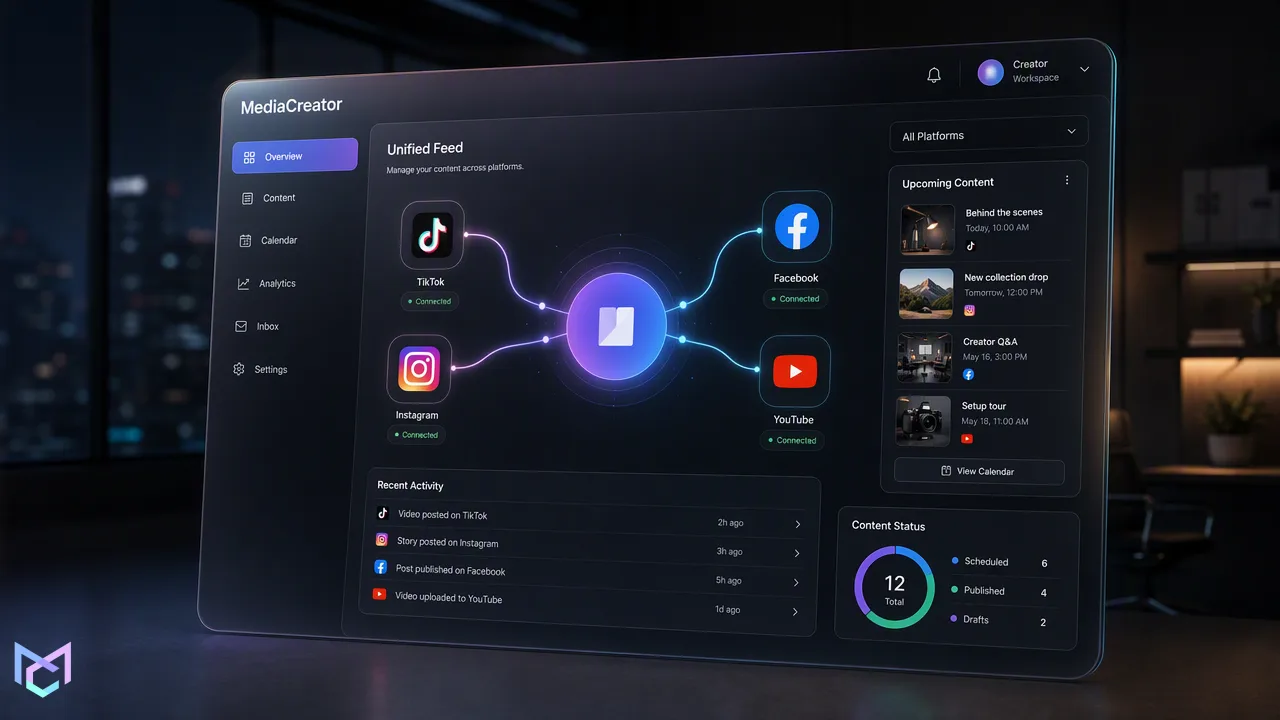
Learn how enterprise teams can scale their social media content workflow by centralizing account management, utilizing human-led AI assistance, and consolidating engagement into a unified dashboard.
Scaling social media content effectively requires a unified workflow that centralizes account management, content adaptation, and engagement. By using a single dashboard to connect platforms via secure OAuth 2.0, teams can eliminate constant tool switching and fragmented processes. Integrating optional AI co-pilots for drafting and visual generation—while maintaining a human-led confirm-first review process—allows teams to maintain brand consistency at scale. A centralized approach supports better visibility across TikTok, Instagram, Facebook, and YouTube, helping enterprise teams manage multiple accounts without relying on shared passwords or browser extensions.
The Challenge of Scaling Social Media
Enterprise teams managing multiple brands or regional profiles often face significant friction when scaling their social media operations. Scaling content across multiple platforms frequently leads to fragmented workflows and inefficient app-switching. When social media managers have to log in and out of native applications to post updates, monitor comments, and review drafts, the operational overhead increases substantially. This fragmentation makes it difficult to maintain a consistent brand voice and delays response times to audience interactions. Furthermore, relying on manual tracking methods or disconnected tools obscures visibility for stakeholders and content leads. To support a higher volume of content without sacrificing quality, organizations need to transition away from isolated applications toward a centralized infrastructure that brings creation, scheduling, and engagement into one unified environment.
Centralizing Your Social Infrastructure
The foundation of an efficient enterprise workflow is a unified dashboard that consolidates access to all required channels. MediaCreator.ai supports direct integrations with TikTok, Instagram, Facebook, and YouTube. Securely connecting these accounts via OAuth 2.0 eliminates the need for password sharing and removes dependencies on vulnerable browser extensions. Managing multiple accounts per platform from one screen improves operational control and provides a clear overview of all active profiles. Instead of distributing credentials across a large team, administrators can authenticate once and manage access centrally. This unified approach allows teams to compose a core message once, adapt the copy and media for each specific platform, and preview the per-platform rendering before anything goes live. By keeping all account connections and drafting tools in a single web-based software environment, teams can reduce the manual switching that typically slows down enterprise content distribution.
Streamlining Content Creation with AI Co-pilots
Artificial intelligence can significantly accelerate the drafting phase of a social media workflow when deployed as an optional assistant rather than an autonomous publisher. MediaCreator.ai provides AI tools like Nova AI, Quick Caption, and Content Studio to assist in drafting and visual generation. Nova AI acts as a co-pilot for post drafting and workflow assistance, while Quick Caption generates platform-adapted copy based on uploaded media. For visual assets, Content Studio supports AI image and video generation directly within the platform. Enterprise workflows should prioritize a human-in-the-loop approach to maintain brand standards. In MediaCreator.ai, AI write actions always show a confirm card before publishing. This confirm-first behavior keeps human operators in control, allowing them to review, edit, and approve all AI-generated text and media. By treating AI as a supportive tool for ideation and adaptation, teams can scale their output while keeping their brand voice consistent and accurate.
Managing Engagement at Scale
Publishing content is only one half of the social media workflow; managing the resulting audience interaction is equally critical. As content volume scales, the number of incoming comments, direct messages, and mentions grows proportionally. Monitoring these interactions across native mobile apps or separate browser tabs is highly inefficient for enterprise teams. A unified inbox brings comments, DMs, and @mentions from connected accounts into one centralized view for review and replies. This consolidated approach helps teams catch engagement opportunities that might otherwise be overlooked and reduces the need for constant platform switching. By addressing interactions from TikTok, Instagram, Facebook, and YouTube in a single interface, social media managers can support timely responses and maintain an active, responsive brand presence across all channels.
Visualizing Your Content Strategy
Coordinating a high volume of posts across multiple platforms requires clear visibility into the publishing pipeline. A visual calendar provides transparency into draft, queued, and published states, which supports team alignment and helps content leads track campaign progress. Instead of relying on external spreadsheets to plan content, teams can use the visual calendar within MediaCreator.ai to see exactly what is scheduled for each connected account. This centralized view helps identify gaps in the publishing schedule, allows for easy adjustments to post timing, and provides stakeholders with a clear picture of the upcoming content strategy. Integrating automated scheduling with intelligent analytics recommendations further informs the workflow, helping teams plan their distribution effectively.
FAQ
How can enterprise teams maintain brand voice while using AI?
Enterprise teams can maintain their brand voice by using AI as an optional drafting assistant rather than an automated publisher. By implementing a confirm-first workflow, where AI write actions always show a confirm card before publishing, human editors can review, refine, and approve all generated copy and visuals to ensure they meet brand standards.
What is the benefit of using OAuth 2.0 for social media management?
Securely connecting accounts via OAuth 2.0 eliminates the need for password sharing and removes dependencies on browser extensions. This method allows teams to authenticate multiple accounts per platform securely, improving operational control and reducing security risks associated with distributing login credentials across a large enterprise team.
How does a unified inbox improve response times?
A unified inbox consolidates comments, direct messages, and @mentions from platforms like TikTok, Instagram, Facebook, and YouTube into a single dashboard. This centralized view reduces the manual effort of logging into separate native applications, helping teams monitor interactions efficiently and supporting faster, more consistent replies to audience engagement.
Get Started with MediaCreator.ai
Discover the power of AI-driven content creation
Related Articles
Continue learning with these related guides
How to Integrate Boosted Reels into Your Social Media Publishing Workflow
Integrate boosted Instagram Reels into your social publishing workflow. Balance organic planning, eligibility, brand voice, and analytics.
BlogThe Full-Funnel Social Media Strategy: Mapping Content Formats to Business Goals
Learn how to build a full-funnel social media strategy by mapping short-form discovery and long-form consideration into a unified cross-platform workflow.
Blog