
Beyond Vanity Metrics: A Workflow Guide to Measuring and Improving Social Media Engagement
Build an actionable social media engagement strategy. Learn how to track high-intent metrics, centralize conversations, and refine publishing workflows.
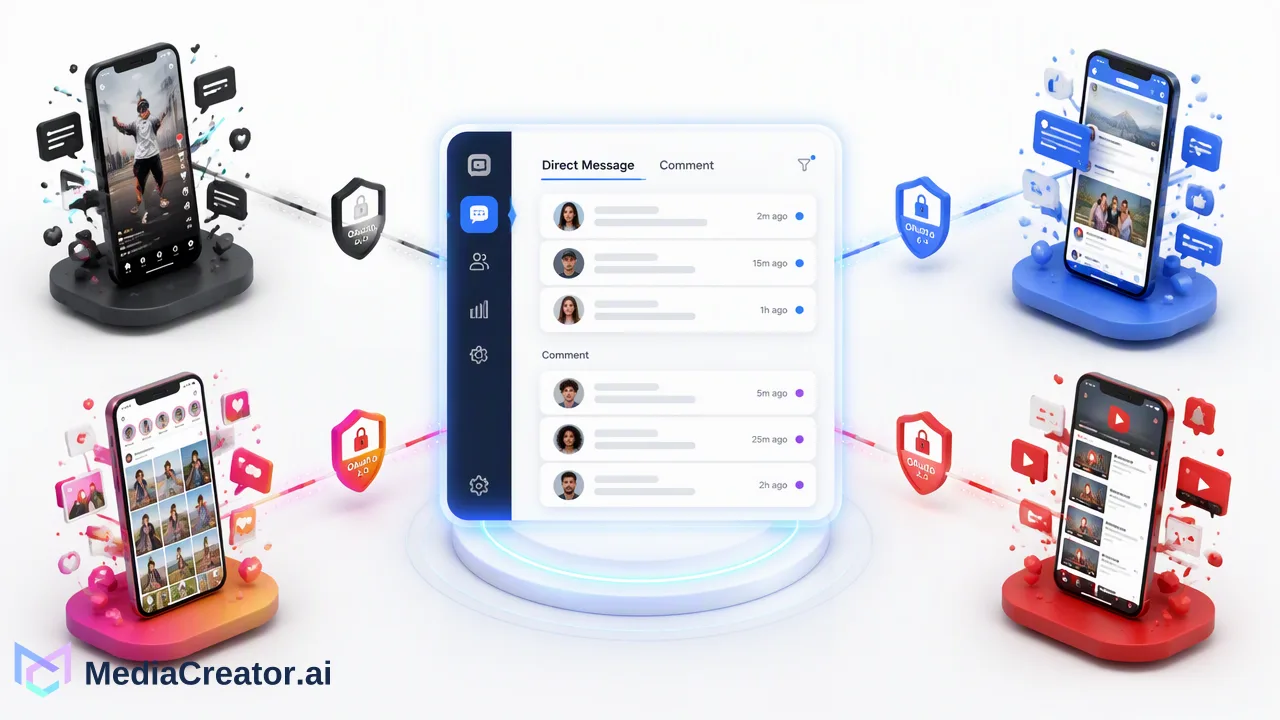
Move beyond vanity metrics by focusing on high-intent interactions, centralized cross-platform inboxes, performance analytics, and human-guided AI workflows.
A sustainable social media engagement strategy looks past surface-level vanity metrics, such as passive likes, to prioritize high-intent interactions that reflect genuine audience interest. Actions such as direct messages, comments, and shares provide deeper insight into audience needs and content resonance. To measure and improve these signals systematically, organizations must centralize cross-platform conversations from channels like TikTok, Instagram, Facebook, and YouTube into a single inbox, evaluate per-post performance trends, and use data-informed scheduling to refine ongoing publishing decisions.
The Shift: From Vanity Metrics to High-Intent Engagement
For years, social media reporting centered primarily on vanity metrics—aggregate like counts, brief impressions, and casual views. While these figures provide a high-level sense of visibility, they offer limited insight into whether content genuinely connects with target audiences or supports organizational objectives. High-intent engagement focuses on active behaviors: direct messages (DMs), meaningful comments, bookmarks, and direct shares. When an audience member takes the time to ask a question via direct message or share a post with a colleague, they demonstrate active intent rather than passive scrolling. | Engagement Type | Interaction Signals | Operational Value | | :--- | :--- | :--- | | Vanity Metrics | Likes, passive impressions, brief video views | Indicates top-of-funnel reach; provides limited insight into true audience interest. | | High-Intent Engagement | Direct messages, detailed comments, post shares, saves | Reflects active resonance; highlights conversation opportunities and content utility. | Focusing on high-intent actions helps marketing teams identify which topics create real dialogue. By prioritizing conversations that encourage direct outreach or peer-to-peer distribution, content planners can move away from superficial engagement spikes and develop material that supports sustained audience loyalty.
Centralizing Your Engagement Workflow
Managing community conversations across multiple networks often leads to operational fragmentation. Switching between mobile applications and individual platform dashboards increases the likelihood that direct messages go unanswered or valuable feedback gets overlooked. A unified engagement workflow consolidates incoming communications into a single interface. By connecting TikTok, Instagram, Facebook, and YouTube accounts via OAuth 2.0—eliminating the need for shared passwords or insecure browser extensions—organizations can monitor inbound activity securely. ### Before Centralization vs. MediaCreator.ai Workflow
- Fragmented Monitoring: Community managers log into individual native applications on different devices, manually checking notifications across separate accounts, risking delayed replies or dropped messages. * Centralized Inbox Queue: A unified social inbox aggregates incoming comments, DMs, and @mentions into a shared feed. Operators can review incoming messages, assign tasks, and publish replies across connected channels without leaving the dashboard. Centralizing audience touchpoints gives teams immediate visibility into emerging themes. When multiple followers across TikTok and Instagram inquire about the same feature, product detail, or campaign topic, community leads can share those insights directly with content creators to inform upcoming content calendars.
Using Data to Inform Content Strategy
Engagement metrics should not exist solely on retrospective performance reports; they should actively guide future content planning. Examining per-account and per-post analytics reveals specific content themes, formats, and structural angles that reliably produce high-intent interactions. Reviewing post performance in the MediaCreator.ai web application helps teams identify trends across specific asset types, such as short-form video on TikTok and YouTube versus multi-image carousels on Instagram. In addition to measuring historical interactions, teams can apply posting-time recommendations to schedule content during periods of peak community activity. Planning content through a visual cross-platform publishing calendar bridges the gap between analytics and execution. Marketing teams can organize posts across draft, queued, and published states, verifying tailored previews for each platform. This structured review ensures that post formats, character counts, and visual media adhere to specific network guidelines before distribution.
Scaling Quality with AI-Assisted Workflows
Increasing publishing volume across multiple channels can strain operational resources, often leading to uneven tone or generic copy. Incorporating targeted AI capabilities into social operations supports creative velocity while maintaining rigorous editorial standards. Within MediaCreator.ai, AI tools assist creators at critical production checkpoints without removing human governance:
- Tone Standardization: Reusable Brand Voice profiles store predefined tone parameters, helping AI-generated copy reflect consistent organizational styling. * Platform Adaptation: Quick Caption evaluates uploaded media assets to draft platform-tailored copy, adjusting framing for TikTok, Instagram, Facebook, and YouTube audiences. * Creative Exploration: Content Studio supports image and video asset generation, while the Nova AI conversational co-pilot assists in structuring outlines and refining messaging hooks. * Human-in-the-Loop Oversight: Every AI write action surfaces a confirm card before publishing. This mandatory verification step requires team approval, ensuring no automated draft publishes without explicit human review. By pairing high-intent engagement data with structured AI assistance and confirm-first publishing safeguards, organizations can scale their social media operations sustainably, maintaining high quality across every community interaction.
FAQ
What is the difference between vanity metrics and high-intent engagement?
Vanity metrics, such as post likes or passive view tallies, capture surface visibility but rarely indicate deep audience commitment or intent. High-intent engagement encompasses direct messages, detailed comments, saves, and shares. These interactions signal active audience participation, providing clearer feedback for evaluating message resonance and supporting audience retention.
How can teams track engagement across multiple social platforms efficiently?
Teams can track multi-platform activity efficiently by connecting their social accounts to a centralized dashboard using OAuth 2.0. Rather than signing into TikTok, Instagram, Facebook, and YouTube independently, operators monitor performance analytics, post status, and incoming audience responses in one shared operational interface.
Why is a unified inbox important for a social media engagement strategy?
A unified inbox aggregates incoming comments, direct messages, and @mentions across all connected profiles into a single operational queue. This structure prevents incoming community inquiries from slipping through the cracks, accelerates team review and reply cycles, and helps teams identify recurring audience topics across different networks.
How does AI assist teams in improving social media engagement workflows?
AI features support engagement workflows by assisting with draft copy generation, adapting post captions for specific platforms, and maintaining consistent brand tone across campaigns. With confirm-first review mechanisms, human editors evaluate every AI-generated action before publishing, keeping editorial standards and voice aligned.
Learn More
Choose the product information that fits the next step in your workflow.
Get Started with MediaCreator.ai
Discover the power of AI-driven content creation
Related Articles
Continue learning with these related guides
The 2026 Social Media Asset Specification Guide: Optimizing Visuals for Every Platform
Optimize social media image sizes and aspect ratios across major platforms. Learn how centralized workflows prevent distortion and compression.
BlogMastering Social Media Algorithms: A Workflow Guide for Algorithmic Optimization
Learn how a structured social media algorithm optimization workflow helps teams adapt content, schedule posts, and review cross-platform analytics.
Blog