
The Strategic Curator: How to Build a Sustainable Social Media Content Mix
Learn how to build a sustainable social media content mix by balancing original creation with strategic curation using a unified publishing workflow.
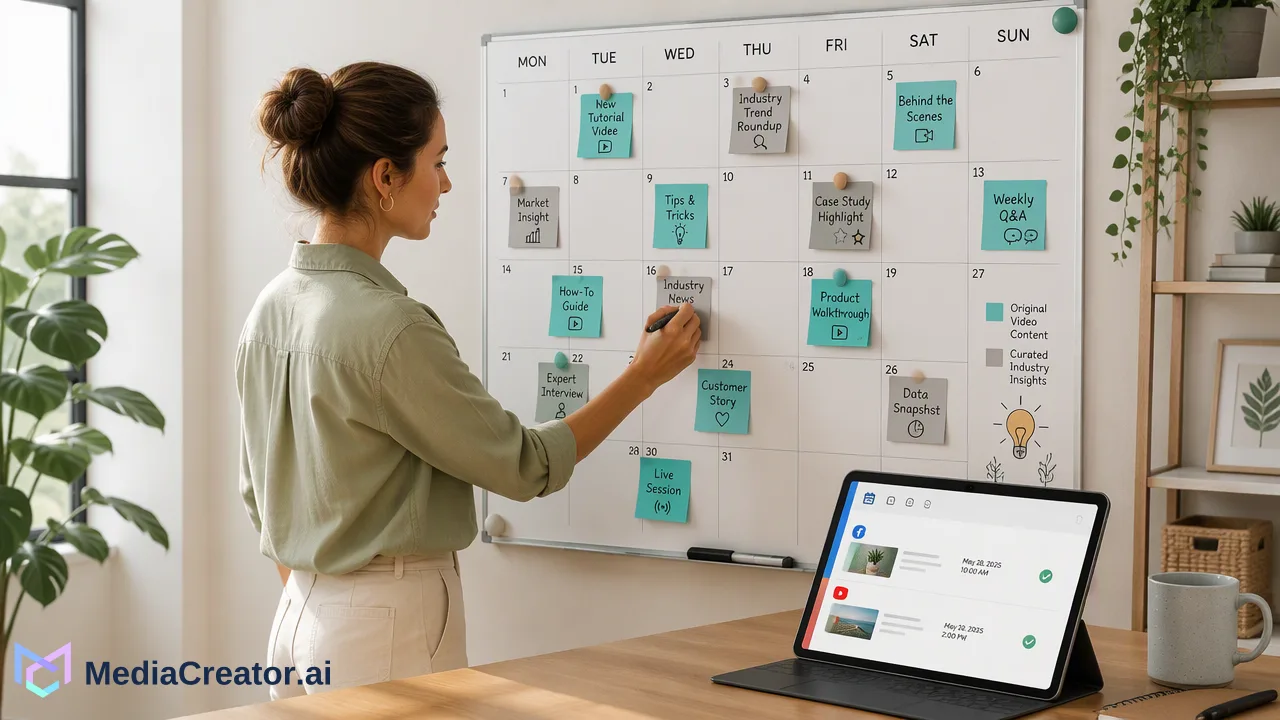
Learn how to balance original content creation with strategic curation to maintain audience engagement and build brand authority using a unified social media workflow.
Content curation is the strategic practice of selecting, organizing, and sharing high-quality third-party insights to supplement original content. By balancing original assets with curated industry knowledge, organizations can maintain consistent audience communication and establish authority without the resource strain of constant creation. A unified social media content curation workflow is essential to organize this mix effectively. When teams integrate curated materials into a central publishing calendar, they can schedule third-party insights alongside original posts to maintain a cohesive brand presence. This approach supports sustainable content operations, helping marketing teams and creators deliver continuous value while reserving heavy production resources for flagship original assets.
The Strategic Value of Content Curation
Content curation serves as a strategic lever for building brand authority and operational efficiency. Rather than relying solely on original production, organizations that curate content position themselves as knowledgeable industry filters. By identifying and sharing relevant third-party insights, teams provide immediate value to their audience, demonstrating a deep understanding of the broader industry landscape. This practice directly supports a sustainable content mix by reducing production burnout. Constantly generating original assets requires significant time, budget, and creative energy. Curation alleviates this pressure by filling gaps in the publishing schedule with high-quality external resources. It helps teams maintain a steady cadence of communication across platforms without exhausting internal resources. Furthermore, sharing external perspectives fosters community goodwill and encourages reciprocal engagement from other industry voices, which can be a valuable input into broader social media strategies.
Defining the Mix: Creation vs. Curation
A successful social media strategy requires a clear distinction between content creation and content curation. Content creation involves producing owned assets—such as original videos, graphics, and thought leadership articles—that establish a unique brand voice and directly communicate core messaging. These original pieces are the foundation of a brand's identity and are typically resource-intensive to produce. Content curation, conversely, focuses on leveraging third-party value. It involves discovering, filtering, and contextualizing external articles, industry reports, or community posts that align with the organization's values. While original content dictates the brand's unique narrative, curated content provides necessary industry context and community value. Balancing these two approaches helps teams avoid a purely promotional feed. A well-calibrated mix verifies that audiences receive a blend of direct brand messaging and broader educational resources, which supports long-term audience retention and positions the brand as a comprehensive resource rather than just a vendor.
Streamlining Discovery and Organization
Managing a hybrid strategy of original and curated content requires streamlined discovery and organization workflows. Without a centralized system, teams often experience tool-switching fatigue, losing time navigating between different platform interfaces, spreadsheets, and discovery feeds. A unified social media management workflow helps teams consolidate these efforts. Using a centralized social account dashboard, teams can connect multiple accounts per platform over OAuth 2.0—without password sharing or browser extensions—to manage their entire digital footprint in one place. Visual calendars play a critical role in this organizational phase. They help teams see the exact balance of original and curated posts across a given week or month. By visualizing the content pipeline, social media managers can identify gaps where curated industry news might be needed or spot clusters where too many third-party links are scheduled back-to-back. This high-level visibility supports strategic planning and helps keep the content mix balanced across all connected channels.
Best Practices for Adding Brand Perspective
Sharing third-party links without context can appear automated or "spammy," diminishing the value of the curation effort. To effectively leverage external content, teams must always add a unique brand perspective. This means introducing the curated piece with original commentary, highlighting a specific takeaway, or posing a question to the audience. Maintaining a consistent tone across both original and curated posts is essential for a cohesive brand identity. When drafting the accompanying commentary for a curated link, the language should seamlessly match the organization's established voice. MediaCreator.ai supports this workflow through its Brand Voice feature, which stores a reusable tone profile. When teams use optional AI assistance to draft captions or summarize curated articles, this feature helps keep the resulting copy consistent with the brand's unique style. By contextualizing external resources through a consistent brand lens, organizations transform standard links into valuable, branded insights that resonate with their specific audience.
Integrating Curation into Your Social Calendar
The final step in a social media content curation workflow is integrating the curated assets into a unified publishing calendar. A cross-platform publishing calendar helps teams compose a post once and adapt it for different environments. Because platforms have different formatting requirements, teams must tailor their curated posts accordingly—for example, adjusting the caption length for Instagram versus formatting a video response for TikTok or YouTube. Effective integration requires managing post states meticulously. A visual calendar that displays posts in draft, queued, and published states helps teams track the progress of both original and curated assets. Before anything goes live, teams should utilize per-platform previews to verify visual consistency and confirm that external links, tags, and commentary render correctly on each specific network. By managing the entire lifecycle—from drafting the initial commentary to queuing the final post—within a single interface, organizations can maintain a reliable, high-quality content cadence that seamlessly blends internal expertise with external industry knowledge.
FAQ
How can teams determine the right balance for a curated content mix?
There is no universal ratio, but a sustainable content mix balances original assets with curated third-party insights to maintain consistent communication without exhausting production resources. Teams often use a visual calendar to review their weekly or monthly schedules, verifying that promotional or original posts are adequately supported by educational, curated industry content. This balance helps maintain audience interest and establishes the brand as a comprehensive industry resource.
How do organizations help curated content align with their brand voice?
Organizations maintain alignment by always adding unique commentary to third-party links rather than posting them without context. By introducing an external article with a specific takeaway or opinion, teams frame the content through their own perspective. Workflows can be further supported by tools like MediaCreator.ai's Brand Voice feature, which stores a reusable tone to help keep AI-drafted captions and summaries consistent with the organization's established identity.
What is the most effective way to organize a mix of original and curated posts?
The most effective approach is utilizing a unified cross-platform publishing calendar. This helps teams manage multiple accounts per platform and view all content in draft, queued, and published states within a single dashboard. By composing posts centrally, adapting them per platform, and previewing how they will render on networks like TikTok, Instagram, Facebook, and YouTube, teams can maintain a cohesive and well-distributed content mix.
Get Started with MediaCreator.ai
Discover the power of AI-driven content creation
Related Articles
Continue learning with these related guides
How to Optimize Your Social Content for AI Search Visibility
Learn how to build an AI search optimization strategy using creator-led social content, unified workflows, and consistent brand messaging across platforms.
BlogHow to Build a Social Listening Workflow for Lead Generation
Learn how to build a social listening lead generation workflow. Discover how to detect signals, qualify intent, and route prospects to your CRM effectively.
Blog