
How to Build a Social Listening Workflow for High-Intent Lead Generation
Learn how to build a proactive social listening lead generation workflow. Discover how a unified inbox helps teams identify and route high-intent signals.
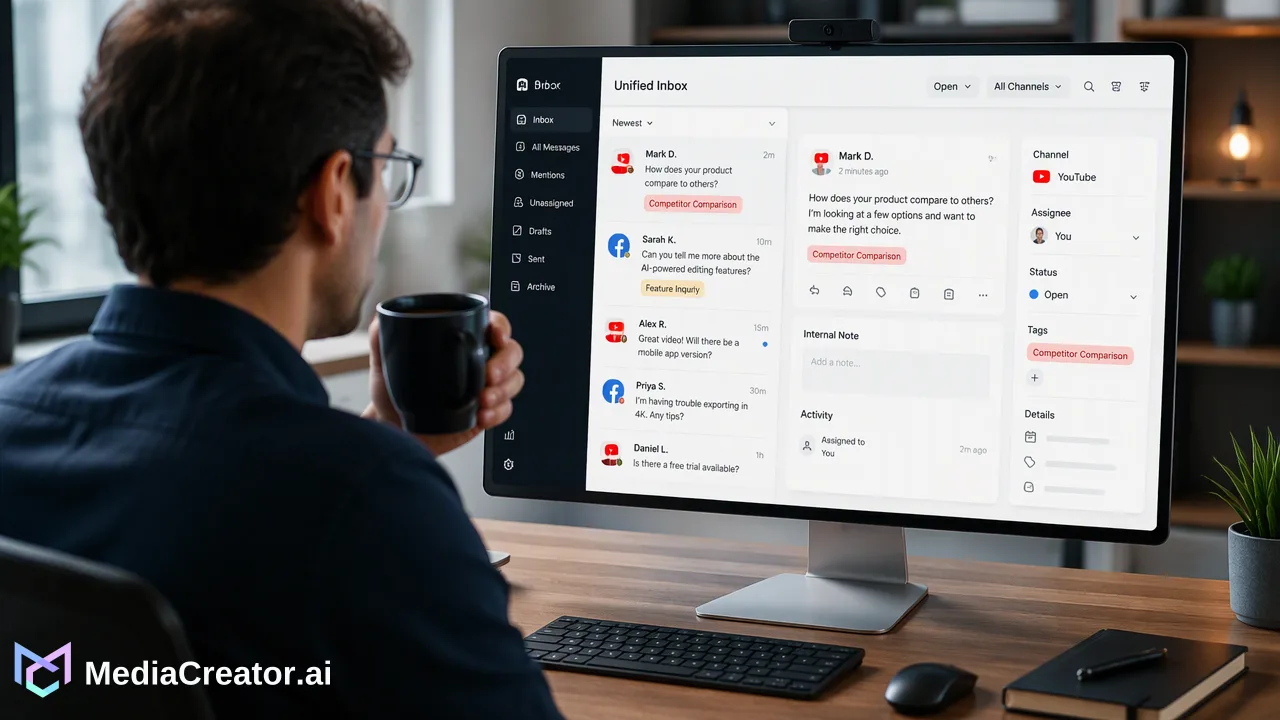
Discover how to transition from passive brand monitoring to an active social listening workflow. Learn how to identify high-intent buying signals and route them into your sales pipeline using a unified inbox.
Social listening for lead generation requires moving beyond passive brand monitoring to actively tracking high-intent signals like product questions, competitor comparisons, and specific pain points. By centralizing all social interactions into a unified inbox, teams can detect these signals in real-time, qualify them, and route them into a sales pipeline. This proactive workflow helps organizations capture high-value opportunities that might otherwise be missed across fragmented channels. Rather than simply measuring sentiment, a structured listening strategy transforms social media comments and direct messages into a measurable source of pipeline growth.
The Shift: From Brand Monitoring to Lead Generation
Many organizations treat social media primarily as a broadcast channel or a venue for reputation management. Passive monitoring tracks sentiment, tallies brand mentions, and measures overall audience health. While useful for marketing analytics, this passive approach often misses the immediate commercial value hidden within daily interactions. Lead-generation listening, by contrast, tracks intent. It involves actively hunting for conversations where users express a clear need, frustration, or readiness to purchase. High-intent signals include direct questions about specific features, requests for competitor comparisons, and expressions of frustration with current solutions. When a user asks a community for recommendations or complains about a specific workflow bottleneck, they are signaling active evaluation. Shifting to a lead-generation mindset means treating these interactions as top-of-funnel inquiries rather than mere engagement metrics. This requires a structured workflow to capture, evaluate, and act on these signals before the prospect chooses an alternative solution.
Identifying High-Intent Signals Across Platforms
Effective social listening requires knowing exactly what a buying signal looks like and where to find it. Teams must focus on platforms where professional and product-related discussions naturally occur, monitoring for specific keywords related to industry pain points and competitor mentions. High-intent signals typically fall into three categories. First, competitor comparisons occur when users ask for alternatives to a specific tool or highlight a gap in a rival product. Second, feature inquiries happen when prospects ask if a solution can handle a specific use case or integrate with their existing stack. Third, pain point expressions involve users detailing a problem they cannot solve, signaling an opportunity for a helpful, solution-oriented intervention. These conversations happen across multiple formats, including public comments, direct messages, and @mentions. Identifying them requires consistent attention to the specific vocabulary prospects use when evaluating solutions. By mapping these keywords and phrases, teams can filter out generic chatter and focus their attention on users who are actively seeking a resolution to their business challenges.
Centralizing Engagement with a Unified Inbox
The primary operational bottleneck in social lead generation is channel fragmentation. When teams must log into multiple native applications to check for messages, response times lag, and context is lost. MediaCreator.ai provides a unified inbox that aggregates comments, direct messages, and @mentions from TikTok, Instagram, Facebook, and YouTube into a single dashboard. This centralization supports faster response times for potential leads and helps reduce the risk of missed opportunities. Instead of manually switching between tabs, social media managers and sales development representatives can review all incoming interactions in one place. The platform connects to these social accounts over OAuth 2.0, requiring no password sharing and no browser extensions, which supports secure access for distributed teams. By consolidating the engagement workflow, the unified inbox serves as the operational hub for lead identification. Teams can systematically review incoming messages, separate support requests from sales inquiries, and maintain a clear view of all active conversations across the organization's supported social footprint.
Scaling the Workflow with AI-Powered Assistance
Managing the volume of social data and responding to inquiries at scale can strain internal resources. AI co-pilots assist in drafting professional, platform-adapted responses to potential leads, helping teams maintain a high cadence of engagement without sacrificing quality. MediaCreator.ai includes optional AI features, such as Nova AI, which can help draft initial replies to complex product questions. To ensure these responses align with company guidelines, the Brand Voice feature stores a reusable tone, keeping AI-drafted copy consistent across all interactions. Crucially, AI write actions in MediaCreator.ai always require a manual confirm-first step before publishing. This architectural choice ensures that human oversight remains central to the lead-generation process. AI assists by surfacing relevant information and structuring the reply, but a human operator must review, refine, and approve the message. This confirm-first workflow supports quality control, allowing teams to personalize the final response and ensure the tone is appropriate for a high-value sales conversation.
Routing Social Leads to Your Sales Pipeline
Identifying a high-intent signal is only the first step; the interaction must then be transitioned into a formal sales process. Organizations need a repeatable process for qualifying social interactions and routing them to the appropriate team. Once a conversation in the unified inbox is identified as a buying signal, the operator should extract relevant qualification data—such as the user's stated pain point, company context, and specific feature interest. This information can then be logged into the organization's CRM system. The social operator can reply to the user, acknowledging their question and offering to connect them with a specialist or providing a direct link to book a consultation. Establishing clear handoff criteria helps ensure that social leads are treated with the same priority as inbound website forms, creating a seamless bridge between social media engagement and pipeline growth.
FAQ
What is the difference between social monitoring and social listening?
Social monitoring is generally a passive process that tracks overall brand sentiment, mentions, and engagement metrics to measure audience health. Social listening, in the context of lead generation, is a proactive workflow that actively hunts for high-intent buying signals, such as competitor comparisons or specific pain points, to identify potential sales opportunities.
How do teams identify high-intent leads on social media?
Teams identify high-intent leads by monitoring for specific keywords and conversation patterns. These include direct questions about product capabilities, requests for alternatives to competitor solutions, and public expressions of frustration with current workflows. Tracking these specific phrases helps filter out generic engagement and highlights users actively evaluating solutions.
How can a unified inbox support lead generation speed?
A unified inbox aggregates comments, direct messages, and @mentions from multiple platforms—such as TikTok, Instagram, Facebook, and YouTube—into a single dashboard. This centralization helps teams review interactions in real-time without switching between native applications, supporting faster response times when engaging with potential leads.
Should organizations use AI to respond to potential leads on social media?
Organizations can use AI to assist in drafting professional, platform-adapted responses, which helps scale engagement. However, human oversight remains critical. In MediaCreator.ai, AI write actions always require a manual confirm-first step before publishing, ensuring that operators can review and personalize the message before it reaches a high-value prospect.
Get Started with MediaCreator.ai
Discover the power of AI-driven content creation
Related Articles
Continue learning with these related guides
How to Optimize Your Social Content for AI Search Visibility
Learn how to build an AI search optimization strategy using creator-led social content, unified workflows, and consistent brand messaging across platforms.
BlogHow to Build a Social Listening Workflow for Lead Generation
Learn how to build a social listening lead generation workflow. Discover how to detect signals, qualify intent, and route prospects to your CRM effectively.
Blog