
Consistent Brand Voice With AI: A Review System for Social Teams
Define voice rules, keep approved examples and review AI social drafts so each platform sounds like the same brand without repeating identical copy.
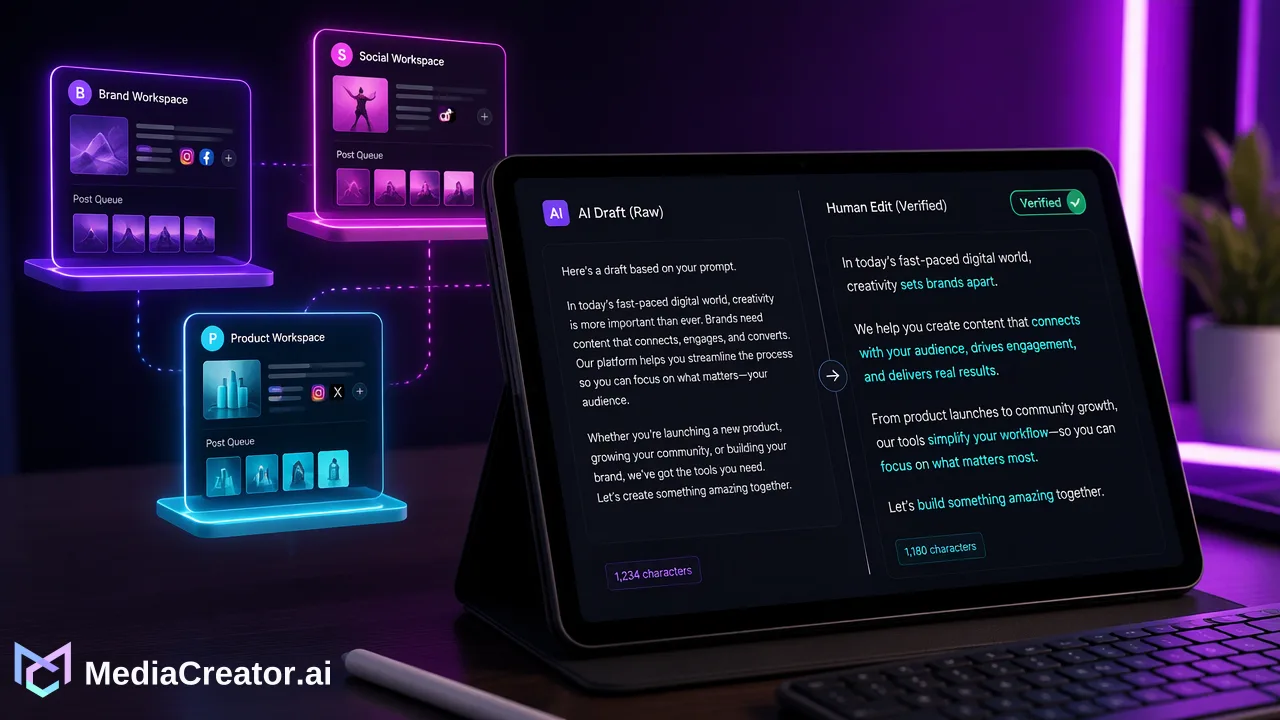
A practical brand-voice system for teams using optional AI writing assistance.
A consistent brand voice with AI starts with a short editorial rule set, examples of approved writing, and a human review before each post goes live. AI can help draft wording, but the team must verify facts and adapt the message for the platform. An opt-in voice setting can support this process when selected; it does not replace editorial ownership.
Define the voice in decisions a writer can apply
A useful voice guide is more specific than adjectives such as friendly or professional. State who the account addresses, what level of expertise readers have, how direct the opening should be and what the brand avoids saying. Include examples of a useful answer, a product explanation and a correction after an error. A reviewer should be able to compare a draft with these examples and point to the exact sentence that needs work.
Separate voice from facts. A brand may prefer a warm and concise style, but that preference cannot turn an uncertain feature into a definite promise. Maintain a small list of approved product terms, current policy wording and claims that require a source. Mark the owner and last review date for each example. When an offering changes, update the reference set before generating more posts.
TikTok for Business's creative guidance recommends a clear, consistent brand identity across placements. For a social team, consistency means recognizable choices in language and presentation, not copying the same caption into every format. TikTok, Instagram, Facebook and YouTube can carry one factual message while using different openings and context.
Build a small library of approved examples
Select a few posts that express the desired voice for different tasks: answering a common question, explaining a feature, announcing a change and responding to a complaint. Annotate each one. Explain why the opening works, where it gives evidence, how it handles uncertainty and what action it asks the reader to take. These examples are a training reference for people and a review reference for AI drafts. They should not be presented as proof that a particular style will increase reach.
Include counterexamples with a short explanation. A draft may be too promotional for a support answer, too casual for a correction, or too vague about an important limitation. Show a revised sentence next to the problematic one. The goal is a repeatable editorial judgment, not a blacklist of every unusual word. Reviewers should retain room to write naturally for the post at hand.
Store the examples where the content team can reach them during composition. MediaCreator's AI content generation and Quick Caption can assist drafting from media. Its Brand Voice setting is opt-in and selected per supported surface, with a limit of ten voices per user. A team should choose the relevant approved voice deliberately rather than assuming a global setting silently applies to every draft.
Review each AI draft against the actual post
Read the final asset, audience brief and proposed caption together. First check factual accuracy: names, dates, product capabilities, terms and any quoted statements. Then check voice: does the copy sound like the account, explain the viewer's question and use the intended level of formality? Finally check platform fit: does the opening make sense in the specific feed and does the preview show the right media? This order prevents attractive language from hiding a wrong claim.
Use a clear approval handoff. The drafter can mark uncertain statements for verification; the subject expert confirms product facts; the editor makes the final voice decision. For a small team, one person may hold several roles, but the checks remain distinct. Keep the approved final version in the content calendar, not just the AI output. MediaCreator's social media scheduler supports per-platform previews, so review the rendered version for each connected account before scheduling.
When a post needs translation or localization, preserve the factual core while adapting idiom and examples. A literal translation of a playful phrase may sound unlike the brand in another language. Ask a reviewer with the relevant language and market knowledge to check important wording. AI suggestions can surface alternatives, but they do not establish cultural fit or accuracy on their own.
Maintain the voice system as the team changes
After publishing, collect examples of audience questions and places where staff had to clarify the post. Use them to update the guide. If multiple reviewers keep making the same edit, the rule may be missing from the brief. If different reviewers disagree, write down the tradeoff and select a standard for that account. A voice guide should evolve through observed editorial needs rather than accumulate vague slogans.
Revisit the approved library when a new product launches, a policy changes or a new team member takes over an account. Retire examples that contain outdated promises. Keep one owner for the guide and a date for the next review. The owner should also check whether the selected opt-in Brand Voice settings still reflect the current examples. An old setting can reproduce old phrasing even when the team has changed its policy.
Consistency still permits variation. A tutorial can be calm and detailed, a short video caption can be brisk, and a service reply can be empathetic, all within one brand's boundaries. TikTok for Business asks teams to consider their distinct tone when planning content. The practical test is whether a reader can recognize the same judgment and reliability across those formats. AI helps prepare drafts; the team owns the final words.
FAQ
How can teams define a consistent brand voice for AI drafts?
Write concrete rules about audience, opening, formality, approved terms and claim boundaries. Pair them with annotated examples that reviewers can apply to a real post.
Does MediaCreator Brand Voice apply automatically to all writing?
No. Brand Voice is opt-in and selected on supported surfaces. Review each draft against the current brief and final asset.
Should TikTok and Instagram captions use identical wording?
They can share the same factual core while adapting the opening, context and presentation for each platform. Preview each final version before scheduling.
Who should approve an AI-assisted social post?
A responsible team member should verify facts, voice and platform fit. Subject experts can review specialized claims before the editor approves the final copy.
Learn More
Choose the product information that fits the next step in your workflow.
Get Started with MediaCreator.ai
Discover the power of AI-driven content creation
Related Articles
Continue learning with these related guides
Social Media Publishing API: What It Covers and When Teams Need One
Learn when a publishing API fits better than a web app, what MediaCreator Public API v1 covers, and how to handle terminal post results.
BlogHow to Review AI-Generated Social Media Posts Before They Go Live
To review AI-generated social media posts, check the factual claims, rights, brand voice, platform fit, and final account preview before scheduling. Treat
BlogBuilding a Scalable Social Media Collaboration Workflow: A Guide for Modern Teams
Learn how to build a scalable social media team collaboration workflow with centralized dashboards, unified inboxes, and AI-assisted drafting.
Blog