
Building a Lean Social Media Tech Stack: How to Eliminate Tool Sprawl and Improve Workflow Efficiency
Eliminate tool sprawl with social media workflow optimization. Consolidate scheduling, community management, and analytics into a single lean tech stack.
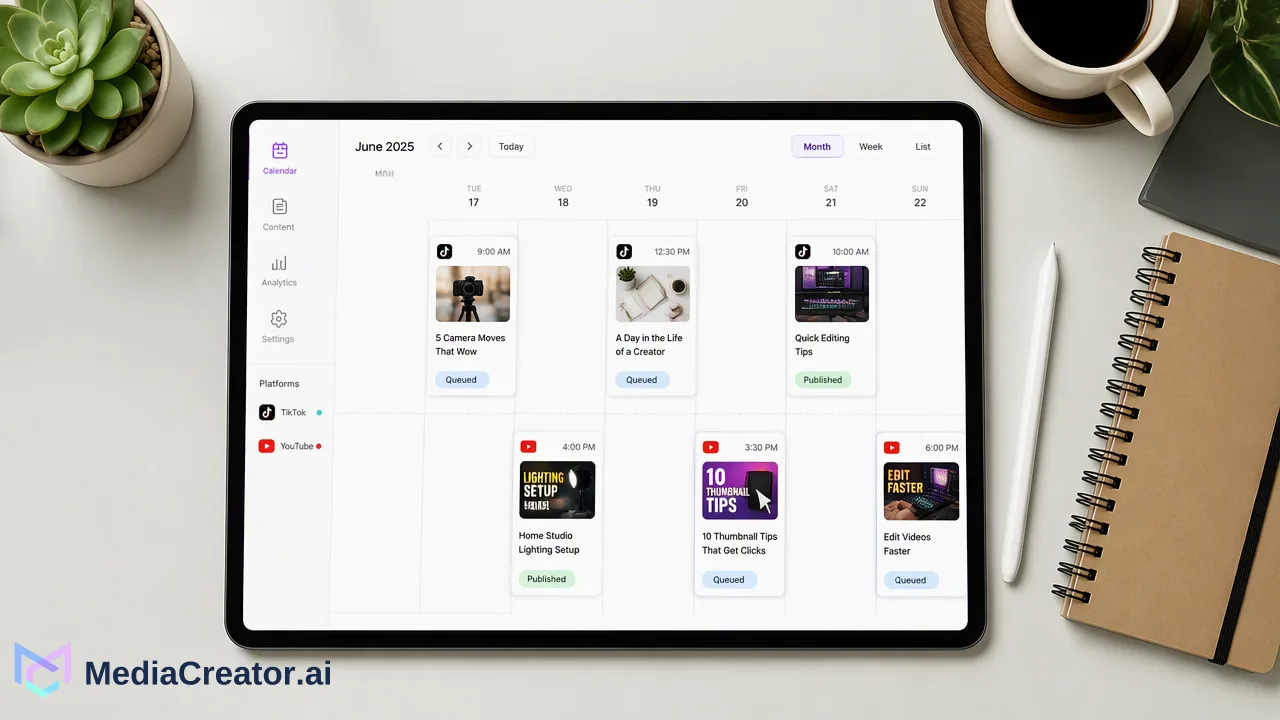
Tool sprawl drains marketing productivity through fragmented logins and siloed metrics. Learn how consolidating social media workflows into a centralized web app streamlines scheduling, engagement, and performance analysis.
Tool sprawl occurs when marketing teams rely on disconnected applications for drafting, scheduling, community management, and reporting, creating fragmented data silos and operational friction. A lean social media tech stack resolves this inefficiency by centralizing core tasks into a unified web application. By consolidating multi-account publishing, unified inbox management, and cross-channel reporting into a single interface, teams eliminate shadow work, reduce credential risks, and streamline social media workflow optimization across major networks.
The Hidden Operational Costs of Tool Sprawl
Marketing departments and agencies often adopt specialized tools for individual tasks: one app for drafting copy, a separate tool for social scheduling, a third-party dashboard for community management, and standalone reporting spreadsheets. While each app may serve a narrow function, running them concurrently introduces tool sprawl—an operational state where disconnected systems generate friction rather than speed.
The most significant cost of tool sprawl is shadow work. Team members spend hours exporting metrics between systems, re-uploading creative assets across multiple sites, and verifying whether scheduled content went live. Managing scattered browser extensions and sharing raw account passwords also introduces security vulnerabilities and operational confusion regarding post ownership.
Furthermore, fragmented tools separate creation from performance data. When publishing calendars operate in isolation from audience analytics, content planners lack immediate feedback loops to inform upcoming creative choices, slowing overall execution.
Evaluating Tools for a Lean Tech Stack
To build an efficient social media management process, organizations should audit their software inventory using rigorous criteria. Every addition must demonstrate measurable utility rather than simply introducing another login to manage.
| Evaluation Criterion | Fragmented Tech Stack | Lean Consolidated Stack |
|---|---|---|
| Account Access | Shared passwords or browser extensions | Direct OAuth 2.0 authorization |
| Channel Publishing | Separate scheduling tabs per network | Single visual calendar with per-platform previews |
| Community Response | Logging into multiple native apps | Unified inbox for comments, mentions, and DMs |
| Performance Review | Manual spreadsheet aggregation | Native analytics tabs for content and audience trends |
| Asset Preparation | Isolated editing tools and storage | Built-in media studio and caption adaptation |
A lean stack prioritizes direct account integrations over precarious workarounds. MediaCreator connects directly with TikTok, Instagram, Facebook, and YouTube via official OAuth 2.0 authentication, letting teams manage multiple profiles without sharing social passwords or installing third-party browser plugins.
Centralizing Publishing, Engagement, and Performance Analysis
Consolidating social operations into an integrated web app transforms daily workflows across three primary disciplines:
Cross-Platform Planning and Scheduling
Coordinating campaigns across diverse channels often leads to inconsistent formatting or disjointed timing. A cross-platform visual calendar provides month, week, and list views displaying draft, queued, published, and failed states. Social media managers can tailor copy, aspect ratios, and publishing times for TikTok, Instagram, Facebook, and YouTube simultaneously, using per-platform previews to verify rendering before scheduling.
Unified Community Management
Managing customer queries and community discussions across several accounts often leads to delayed replies or missed mentions. A unified social inbox brings inbound comments, direct messages, and brand mentions into a centralized workspace. Team members can assign internal notes and coordinate responses without toggling between native applications, subject to available platform permissions.
Centralized Performance Tracking
Instead of compiling metrics manually from separate native dashboards, integrated analytics tools offer unified reporting tabs for high-level overviews, content performance, audience composition, and timing patterns. Access to centralized data and best-time recommendations helps teams refine posting schedules using verified engagement trends.
Scaling Social Operations with Assisted Workflows
Scaling social media output across multiple brand accounts traditionally required expanding headcount or multiplying manual hours. Incorporating integrated assistance into a consolidated workspace allows teams to expand output while maintaining consistent operational quality.
Context-Aware Content Drafting
Writing unique copy for multiple platforms from scratch can bottleneck distribution. Automated tools like Quick Caption analyze uploaded images or video assets to generate channel-adapted draft copy, eliminating repetitive manual rewriting across profiles. Teams can also establish distinct brand voices to preserve tone consistency.
AI Co-pilots with Human Review
AI workflow assistants like Nova can examine account context, run analytics summaries, and guide creative ideation. To protect editorial integrity and brand standards, all AI-assisted copy and content generation require manual user review before publication. Maintaining this human-in-the-loop checkpoint ensures that team oversight guides all external communications while routine preparation is streamlined.
FAQ
How does a centralized platform support social media workflow optimization?
A centralized platform brings multi-account scheduling, community management, and reporting into one dashboard. This reduces the time lost switching between separate applications, minimizes manual data compilation, and simplifies permission management across team members.
What are the advantages of managing engagement through an integrated social inbox?
An integrated social inbox aggregates direct messages, comments, and mentions from connected profiles into a single feed. It supports internal collaboration through notes and structured response workflows, helping teams handle inbound conversations without opening each native network individually.
How can teams responsibly incorporate AI into their publishing workflow?
Teams can use AI tools to draft platform-adapted captions, summarize performance data, and assist with copy variations. Maintaining editorial oversight by requiring human review before any post is published ensures brand alignment and voice consistency.
Learn More
Choose the product information that fits the next step in your workflow.
Get Started with MediaCreator.ai
Discover the power of AI-driven content creation
Related Articles
Continue learning with these related guides
The Hidden Cost of 'Smart' Tech: Why Your Content Workflow Should Stay Lean
Learn how structured publishing caps, controlled media storage, and lean automation support digital efficiency across modern social media workflows.
BlogHow to Calculate and Benchmark Social Media Engagement Rates in 2026
Learn how to perform social media engagement rate calculations in 2026. Compare reach versus follower formulas and benchmark using your historical data.
Blog