
The Hidden Cost of 'Smart' Tech: Why Your Content Workflow Should Stay Lean
Learn how structured publishing caps, controlled media storage, and lean automation support digital efficiency across modern social media workflows.
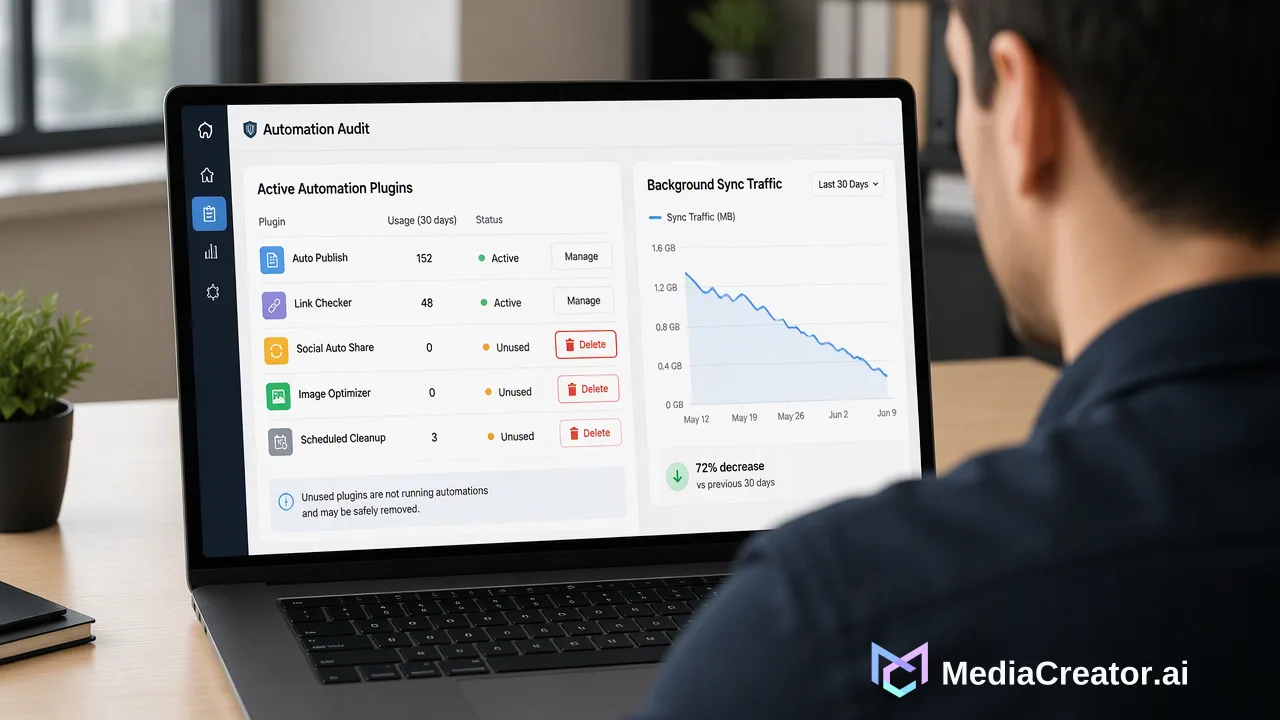
Unmonitored automation can create operational bloat. Discover how structured limits, tiered storage, and asynchronous processing support digital efficiency in content teams.
The recent discovery of an internet-connected coffee machine generating one terabyte of traffic in ten days illustrates the hidden operational overhead of unmonitored automation. In digital marketing and social media operations, digital efficiency requires clear visibility into background processes, disciplined asset management, and predictable platform boundaries. Teams maintain lean operations by replacing untracked background syncing with structured publishing caps, tiered media storage, and on-demand asynchronous media generation.
The Hidden Tax of 'Smart' Connectivity
A widely discussed incident involving a connected home appliance highlighted how easily automated hardware can saturate network resources without obvious external symptoms. An IT specialist reviewing his parents' home network discovered that their smart coffee maker had transferred approximately 1TB of data within a 10-day window. While investigation showed that the traffic remained largely within the local network rather than leaking externally, the runaway data loop completely saturated the local wireless access point.
The owner ultimately disconnected the hardware because the device offered zero visibility into its internal operations or bandwidth consumption. In modern technology environments, connectivity is often added to everyday workflows under the banner of convenience. However, when connected systems lack transparent governance, self-contained error boundaries, or observable bandwidth controls, the convenience quickly turns into a liability.
This dynamic is not confined to physical consumer devices. Software tools, automated distribution scripts, and cloud connectors can create similar operational friction when they run background synchronization routines without clear operational thresholds.
Identifying Bloat in Content Workflows
Content marketing teams and digital studios frequently face software-based equivalents of runaway background traffic. As creators integrate automated publishing utilities, generative media tools, and cloud storage repositories, digital overhead compounds quietly across several areas:
| Operational Area | Unmonitored Workflow Impact | Lean Workflow Practice |
|---|---|---|
| Asset Storage | Uncapped uploads create bloated, unsearchable media drives. | Tiered storage boundaries aligned with active project needs. |
| Content Publishing | High-frequency auto-posting risks feed fatigue and scheduling errors. | Structured monthly post caps that encourage deliberate cadence. |
| Media Processing | Always-on background rendering drains local compute resources. | On-demand asynchronous generation with clear task status. |
| Channel Management | Disconnected point tools require fragmented logins and manual handoffs. | Unified dashboard oversight across authorized social accounts. |
Digital efficiency in content operations is about eliminating invisible waste. When creators maintain dozens of unmonitored draft iterations, unchecked video variations, and redundant automation plugins, cognitive load increases. Teams spend valuable hours troubleshooting disconnected integrations or sorting through gigabytes of outdated creative collateral instead of refining distribution strategy.
Maintaining Lean Operations with Structured Limits
To maintain digital efficiency across multi-channel campaigns, organizations benefit from platforms that establish clear operational parameters. MediaCreator provides a centralized web environment for publishing, media creation, analytics, and community engagement across TikTok, Instagram, Facebook, and YouTube using OAuth connections.
Rather than encouraging unbounded, uncontrolled automation, MediaCreator introduces predictable governance through structured plan caps:
- Publishing Volume Limits: Monthly post caps are defined across tiers, providing Free (30 posts), Creator (500 posts), Team (2,000 posts), and Business (unlimited posts). These parameters help social media managers maintain a steady, strategic cadence.
- Connected Account Governance: Account connections scale systematically, supporting Free (5 accounts), Creator (15 accounts), Team (30 accounts), and Business (unlimited accounts), keeping brand profiles organized in a single interface.
- Tiered Storage Capacities: Storage allocations keep digital workspaces tidy, offering Free (200 MB), Creator (10 GB), Team (50 GB), and Business (200 GB) limits to support asset hygiene.
- Asynchronous Media Creation: Within the Content Studio, image and video rendering operates asynchronously. Rather than running unmonitored background tasks that lock local workstations, the platform processes media jobs independently, displaying required credits in the interface before execution.
By establishing explicit limits on publishing cadence and asset storage, teams replace chaotic digital sprawl with an intentional, disciplined content pipeline.
FAQ
How can teams identify hidden data bloat in social media operations?
Teams identify operational bloat by auditing active storage volumes, evaluating whether media assets remain organized, and checking whether automation tools run continuous background tasks. Unmonitored background sync and sprawling draft libraries often consume significant administrative time and cloud capacity without contributing to publishing goals.
Why are structured posting limits beneficial for team efficiency?
Structured posting limits establish predictable operational boundaries across publishing pipelines. By defining explicit monthly post caps across plan tiers, teams can plan distribution schedules intentionally, focus on quality over high-volume noise, and avoid unexpected operational bottlenecks across connected social channels.
How does asynchronous media generation support workflow stability?
Asynchronous media generation processes image and video creation requests independently rather than relying on persistent, unmonitored background connections. This architecture isolates asset rendering from publishing calendars, giving operators direct visibility over resource usage and task completion.
Learn More
Choose the product information that fits the next step in your workflow.
Get Started with MediaCreator.ai
Discover the power of AI-driven content creation
Related Articles
Continue learning with these related guides
How to Calculate and Benchmark Social Media Engagement Rates in 2026
Learn how to perform social media engagement rate calculations in 2026. Compare reach versus follower formulas and benchmark using your historical data.
BlogBuilding a Lean Social Media Tech Stack: How to Eliminate Tool Sprawl and Improve Workflow Efficiency
Eliminate tool sprawl with social media workflow optimization. Consolidate scheduling, community management, and analytics into a single lean tech stack.
Blog