
Predictive Media Intelligence: A Workflow Guide for Proactive Social Strategy
Learn how a predictive media intelligence workflow helps teams spot conversation trends early, manage brand risk, and plan social content proactively.
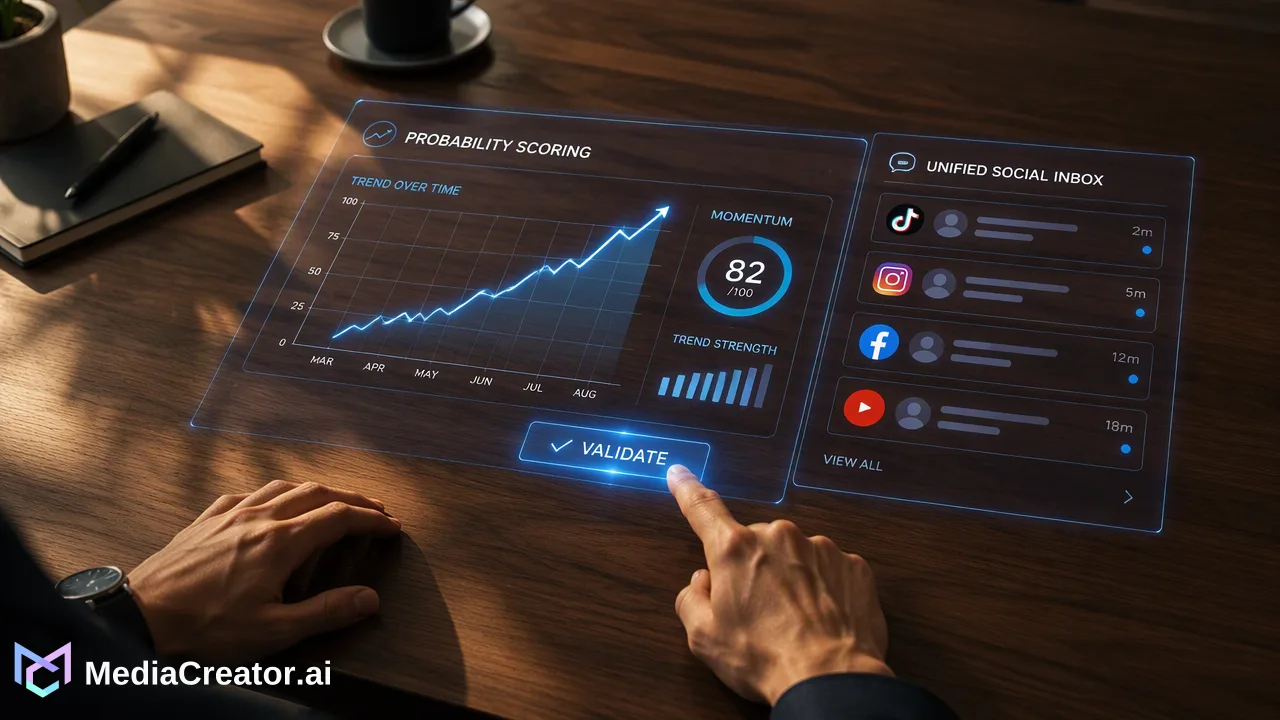
A practical guide detailing how social media teams can move from reactive monitoring to a predictive media intelligence workflow using proactive forecasting, human oversight, and integrated calendar management.
A predictive media intelligence workflow combines artificial intelligence with historical conversation patterns to project where online discussions and audience sentiments are heading. Rather than logging volume after an event peaks, this approach evaluates probability and momentum across news and social channels. Marketing teams use these forward-looking signals to adjust publishing calendars, prepare brand responses, and engage audiences before topics reach saturation.
Understanding Predictive Media Intelligence
Traditional social listening primarily functions as a rearview mirror. Conventional monitoring tools collect historical volume, count brand mentions, and aggregate past engagement metrics. While historical metrics help measure previous campaign performance, they leave marketing teams in a reactive posture—scrambling to respond to conversations that have already matured or peaked. Predictive media intelligence introduces an analytical layer that shifts focus from raw historical volume to conversation trajectory and velocity. By applying machine learning models to early textual and sentiment signals across web and social channels, predictive systems project the likelihood that an emerging topic will expand into a wider public narrative. | Capability | Reactive Social Monitoring | Predictive Media Intelligence | | :--- | :--- | :--- | | Primary Focus | Historical mention counts and past reach | Narrative trajectory, velocity, and probability | | Strategic Stance | Responding after volume spikes occur | Adjusting plans before conversations peak | | Core Output | Retrospective performance summaries | Early momentum signals and risk indicators | | Operational Value | Post-campaign reporting and audit | Proactive calendar planning and message preparation | This structural shift allows brand teams, agencies, and studio operators to anticipate audience interest rather than merely reacting to it.
The Core Workflow: From Signals to Strategy
Transitioning to a proactive model requires a disciplined operational workflow. Predictive signals do not dictate strategy automatically; they provide structured foresight that informs team decision-making. The end-to-end workflow generally moves through three core phases:
- Signal Ingestion and Early Pattern Detection: The system evaluates emerging themes across social networks, news coverage, and public web forums. Instead of measuring total volume, the models monitor early acceleration—tracking how quickly a specific topic, phrase, or sentiment cluster moves across communities. 2. Contextual Evaluation and Probability Scoring: Algorithmic models compare emerging patterns against historical conversation arcs. This analysis generates a projection of whether a discussion is likely to dissipate quickly or gain sustained momentum across mainstream channels. 3. Human Strategic Interpretation: AI-generated forecasts require human validation. Strategists evaluate whether a projected trend aligns with brand positioning, target audience interest, and ongoing commercial initiatives before committing creative resources. Human oversight is indispensable at this stage. Automated models can identify statistical momentum, but they cannot assess brand tone, ethical boundaries, or long-term brand equity. Cross-functional teams use predictive findings to determine whether to join a conversation, adjust existing schedules, or monitor emerging issues quietly.
Operationalizing Insights with MediaCreator.ai
Predictive insights only deliver strategic value when teams can translate them directly into production and publishing workflows. MediaCreator.ai provides the operational workspace to bridge the gap between analytical forecasts and multi-channel execution. Once strategists identify an emerging trend with high projected relevance, they can operationalize the response across connected accounts on TikTok, Instagram, Facebook, and YouTube:
- Coordinated Visual Scheduling: Teams use the Cross-Platform Publishing Calendar to adjust content schedules in real time. Draft posts can be restructured, reordered, or queued to ensure topical assets publish before a trend reaches saturation. - Channel-Specific Adaptation: Content can be composed once and customized to fit each network's format and community expectations. Previews display exact platform rendering before any post is queued. - Timing and Cadence Optimization: Teams can consult in-app Analytics and Best-Time Recommendations to determine optimal publishing windows for each connected profile, refining distribution schedules without manual guesswork. - Controlled Content Creation: Optional AI features—such as Quick Caption for platform-adapted text, Content Studio for visual creation, and Brand Voice for tone alignment—help teams draft assets rapidly. All AI write actions maintain confirm-first cards, ensuring full editorial oversight before anything is scheduled.
Managing Brand Sentiment and Reputation Risks
Predictive intelligence plays a critical role in brand safety and issue management. In standard workflows, customer support and PR teams often discover negative sentiment only after a post goes viral or complaints accumulate in high numbers. Predictive models evaluate early sentiment shifts to help teams discern whether a negative mention is an isolated complaint or the early marker of a wider reputational issue. When velocity indicators signal that a concern may spread across communities, communications teams can intervene proactively. Organizations operationalize this risk management through MediaCreator.ai's Unified Social Inbox. Comments, direct messages, and @mentions from connected TikTok, Instagram, Facebook, and YouTube accounts aggregate into a centralized feed. Community managers can promptly review priority messages, respond directly, and resolve customer grievances before narrative momentum intensifies across external channels.
FAQ
How does predictive intelligence differ from standard social analytics?
Standard social analytics evaluate historical performance, measuring metrics such as past impressions, published post interactions, and historical comment volume. Predictive media intelligence focuses on trajectory and probability, analyzing early narrative signals across platforms to forecast how topics and sentiment may develop in the near future.
Can AI automate an entire social media strategy autonomously?
No. Artificial intelligence assists by detecting patterns, modeling momentum, and drafting candidate copy, but human oversight remains essential. Strategists must evaluate brand context, review nuances, and confirm all publishing actions before messages go live.
How can teams integrate predictive insights into a content calendar?
Teams translate projected topic momentum into scheduled posts by queuing relevant drafts in a visual publishing calendar, tailoring copy and visual creative per channel, and scheduling delivery around recommended posting windows.
Learn More
Choose the product information that fits the next step in your workflow.
Get Started with MediaCreator.ai
Discover the power of AI-driven content creation
Related Articles
Continue learning with these related guides
Building a Human-in-the-Loop AI Workflow: A Practical Guide
Learn how to build a scalable, human-in-the-loop AI content workflow that protects brand voice, streamlines drafting, and maintains editorial oversight.
BlogHow to Build a Social CRM Workflow: Connecting Social Engagement to Customer Data
Learn how to build a social CRM workflow. Connect real-time social engagement across platforms to customer records for better sales and support routing.
Blog