
Building a Real-Time Social Media Monitoring Workflow: A Guide to Reputation Management
Learn how to build a real-time social media monitoring workflow to track mentions, assess sentiment, and protect brand reputation across channels.
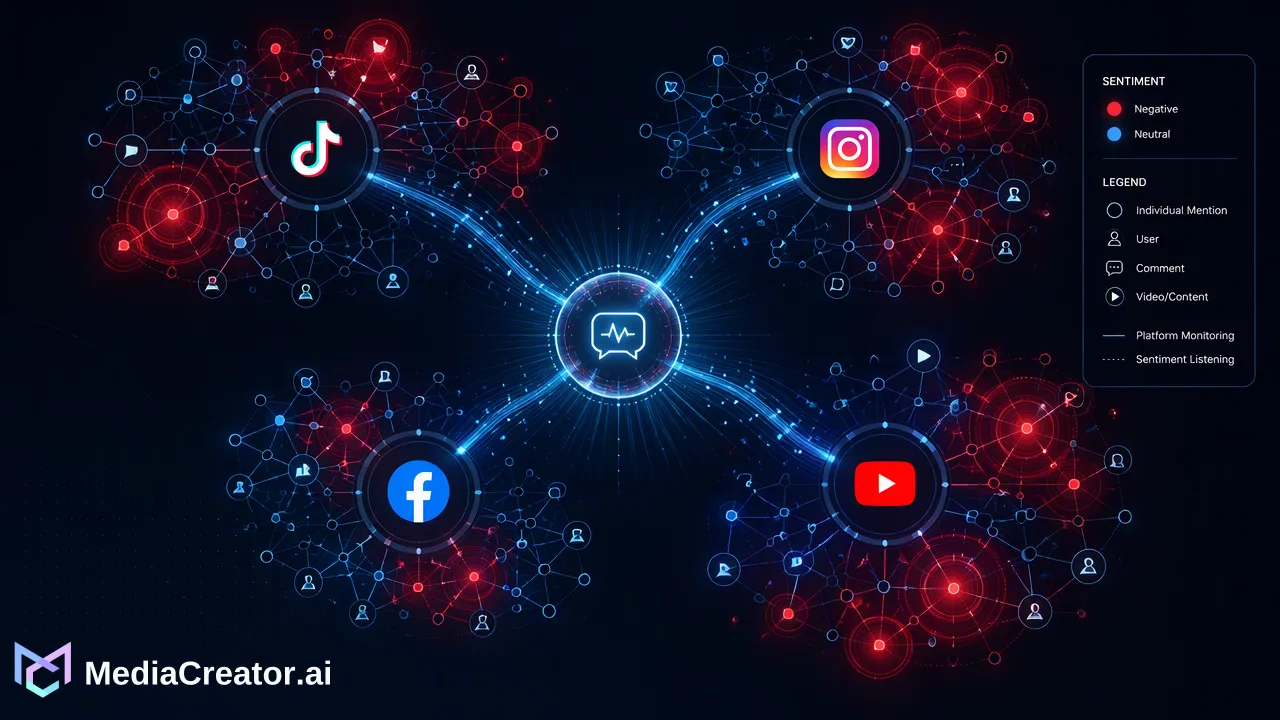
A practical guide to designing a real-time social media monitoring workflow. Learn how to separate monitoring from listening, track mentions across platforms, apply sentiment triage, and feed insights into product and marketing teams.
A social media monitoring workflow is an operational system for tracking direct brand mentions, direct messages, comments, and sentiment across social channels to protect brand reputation and respond to audience feedback in real time. Rather than checking multiple native applications ad hoc, organizations centralize incoming interactions from platforms such as TikTok, Instagram, Facebook, and YouTube into a unified inbox. This workflow helps teams filter high-volume social noise, flag emerging PR risks through sentiment triage, and route operational insights directly to customer support, marketing, and product development teams.
Defining Social Media Monitoring vs. Social Listening
Building an effective reputation management process requires drawing a clear line between social media monitoring and social listening. While teams sometimes treat the terms interchangeably, they address different operational cadences and strategic goals. | Dimension | Social Media Monitoring | Social Media Listening | | :--- | :--- | :--- | | Operational Focus | Micro-level interactions, direct messages, brand @mentions, and post comments. | Macro-level conversations, industry themes, brand perceptions, and competitor dynamics. | | Time Horizon | Real-time, hour-by-hour triage and operational resolution. | Long-term historical trend analysis over weeks, quarters, or years. | | Primary Objective | Immediate customer support, brand reputation protection, and issue mitigation. | Market research, campaign positioning, and product roadmapping. | | Action Type | Reactive engagement and structured internal routing. | Strategic planning and qualitative operational adjustments. | Social monitoring operates as a continuous pulse check on your brand’s active digital touchpoints. When a customer expresses frustration in an Instagram comment or tags a brand handle in a TikTok video, monitoring ensures that specific notification surfaces immediately. Social listening, by contrast, evaluates whether negative sentiment regarding a product feature is growing across an entire category, even when the brand itself is not directly tagged.
The Role of Sentiment Analysis in Reputation Management
High engagement volume can obscure urgent reputational threats. A sudden spike in inbound comments may indicate a viral marketing win, an operational outage, or an unfolding public relations incident. Sentiment analysis provides the interpretive layer that classifies incoming commentary by tone, helping teams prioritize high-impact conversations over routine chatter. In a structured workflow, incoming messages are categorized into positive, neutral, or negative sentiment. Negative sentiment acts as an early warning trigger. By sorting inbound communications by sentiment severity, social operations leads can triage critical issues first. For example, a post comment detailing a billing defect or platform failure can be escalated immediately to engineering or technical support, while neutral product inquiries proceed through standard customer service queues. Applying sentiment triage directly to inbound feeds protects teams from notification fatigue. Rather than reading messages chronologically, moderators can address volatile interactions before negative word-of-mouth compounds.
Building a Real-Time Monitoring Workflow
An effective social media monitoring workflow bridges account connections, daily triage, and operational escalation. Moving away from scattered native apps toward a centralized system prevents fragmented communications and missed notifications. ### Account Connection and Centralization Begin by connecting all active brand channels—including TikTok, Instagram, Facebook, and YouTube—using secure OAuth 2.0 authentication. Connecting accounts directly via standard authorization protocols avoids password sharing and browser extensions, maintaining security while granting shared access across team members. Once connected, incoming comments, direct messages, and direct @mentions flow into a single unified social inbox. ### Daily Operational Triage With channels aggregated, social managers establish daily protocols to keep response pipelines organized:
- Filter Noise with AI Assistance: Use optional AI capabilities to filter spam, detect duplicate inquiries, and surface priority messages. When AI drafting tools assist with response suggestions, maintain a strict confirm-first workflow so human operators review and approve every message before it is published. 2. Categorize by Urgency: Sort the unified inbox into distinct queues: urgent PR/outage flags, standard support questions, general brand praise, and low-priority community interactions. 3. Assign Ownership: Route actionable items to designated community managers, eliminating confusion over who owns specific cross-platform conversations. 4. Review and Resolve: Mark threads as completed once addressed to maintain clean operational dashboards and ensure accountability.
Integrating Monitoring into Marketing and Product Development
Social monitoring data holds value far beyond community management; it provides direct feedback on product quality, positioning, and content resonance. To capitalize on this intelligence, organizations must establish structured feedback loops across functional departments. Cross-departmental data sharing should be formalized through recurring reporting cadences. For instance, customer friction logged within the unified inbox should be tagged and shared with product development teams during sprint planning. When users repeatedly leave comments on YouTube or Instagram tutorials regarding a confusing onboarding step, product managers gain concrete context to guide UI updates. Similarly, marketing teams should use monitoring data to refine future publishing calendars. If recurring comments reveal customer confusion around a newly launched service, the content team can draft clarifying guides or platform-specific walkthroughs. Centralizing feedback bridges the gap between customer sentiment and business decision-making, ensuring social insights inform broader operational growth.
FAQ
What is the difference between social monitoring and social listening?
Social monitoring is reactive and tactical, focusing on identifying direct brand mentions, incoming direct messages, and specific customer inquiries that require immediate triage or response. Social listening is reflective and strategic, analyzing aggregate industry trends, broad audience sentiment, and competitor conversations over time to inform broader business direction.
How does a unified social inbox support reputation management?
A unified social inbox aggregates comments, DMs, and @mentions across connected platforms—such as TikTok, Instagram, Facebook, and YouTube—into a single workspace. This centralization eliminates the need to manually log in and out of individual native apps, reducing response delays and helping teams catch escalating negative interactions before they expand into widespread brand issues.
Why is real-time monitoring critical for brand reputation?
Customer sentiment on social platforms develops rapidly. Real-time monitoring provides immediate visibility into operational problems, negative sentiment spikes, or platform-specific engagement surges. Catching issues early helps organizations review and resolve customer dissatisfaction before narratives spread across secondary channels.
Learn More
Choose the product information that fits the next step in your workflow.
Get Started with MediaCreator.ai
Discover the power of AI-driven content creation
Related Articles
Continue learning with these related guides
How to Optimize Your Facebook Business Page for Professional Social Media Management
Learn how facebook business page optimization helps teams manage brand presence, collaborate securely via OAuth, and streamline cross-platform publishing.
BlogMastering LinkedIn Consistency: A Workflow Guide to Automated Scheduling
Streamline your scheduling workflow by shifting from manual daily posts to batch planning, visual calendars, and multi-platform management.
Blog