
How to Build a Social Listening Workflow for Lead Generation
Learn how to build a social listening lead generation workflow. Discover how to detect signals, qualify intent, and route prospects to your CRM effectively.
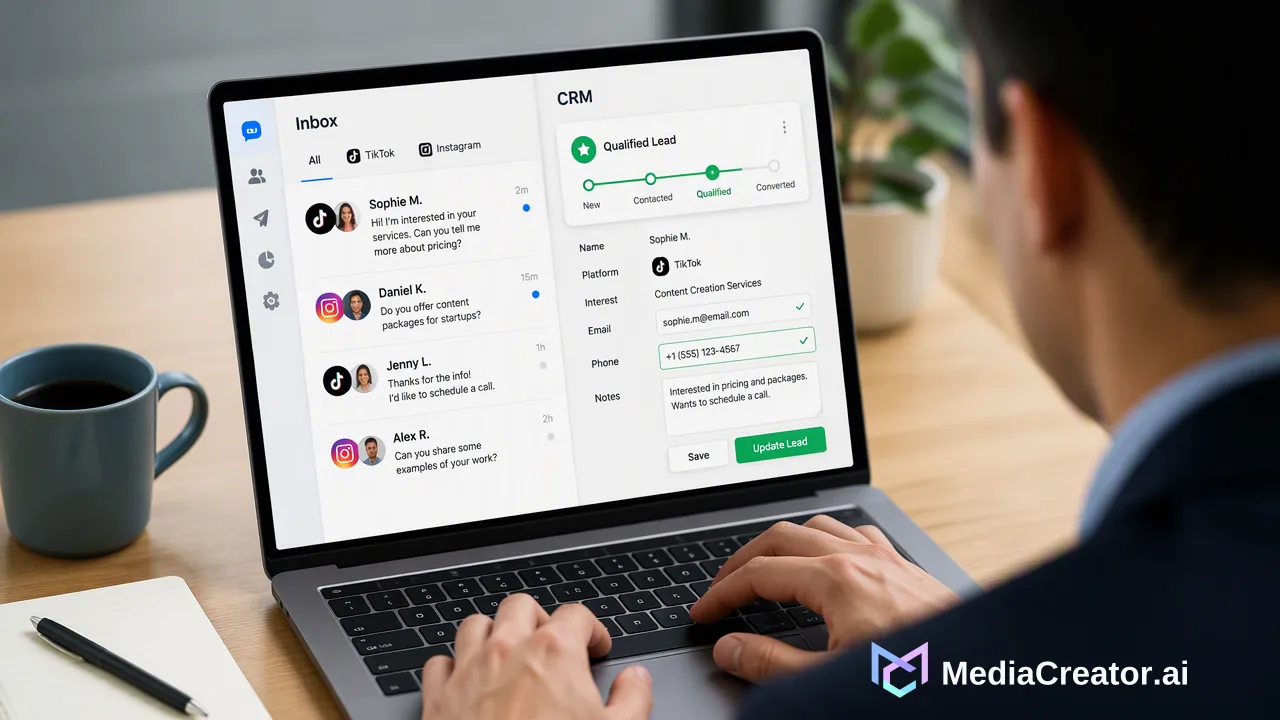
Learn how to transform passive social media monitoring into a proactive lead generation workflow by centralizing signal detection, qualifying intent, and routing prospects to your CRM.
A successful social listening lead generation workflow requires moving beyond simple brand mentions to track high-intent keywords and customer pain points. By centralizing engagement in a unified inbox and using a structured process for scoring and CRM routing, teams can proactively identify and engage potential leads on platforms like TikTok, Instagram, Facebook, and YouTube without manual app switching. Transforming passive monitoring into an active pipeline involves detecting relevant signals, qualifying the intent behind comments or direct messages, and seamlessly passing those opportunities to sales operations.
The Shift from Passive Monitoring to Proactive Lead Generation
Organizations often confuse social media monitoring with social listening. Monitoring is the process of tracking social media channels for direct mentions of a brand, competitors, or specific products. It is inherently reactive, focusing on acknowledging what has already been said. In contrast, social listening is a proactive lead-generation strategy when integrated into a repeatable workflow. It involves analyzing those conversations to gain actionable insights, identify broader industry pain points, and act on immediate opportunities. For marketing managers and sales operations teams, this shift means treating social platforms not just as broadcasting channels, but as top-of-funnel acquisition sources. When a user expresses frustration with a competitor's product or asks for recommendations to solve a specific problem, that is a high-intent signal. Capturing these signals requires a structured approach. Without a defined workflow, teams risk missing critical buying indicators buried in comment threads or direct messages. By establishing clear protocols for signal detection, qualification, and routing, businesses can transform unstructured social data into a predictable pipeline of qualified prospects.
Step 1: Centralizing Signal Detection Across Platforms
The foundation of any effective social listening lead generation workflow is visibility. Managing multiple social accounts natively requires constant app switching, which creates operational friction and increases the likelihood of missing time-sensitive engagement. Unified engagement tools allow teams to monitor multiple platforms from a single dashboard, ensuring no high-intent signal is missed. MediaCreator.ai provides a unified inbox for collecting comments, DMs, and @mentions from TikTok, Instagram, Facebook, and YouTube. This centralization allows social media managers and sales development representatives to view all incoming interactions in one place. Security and access control are critical when managing corporate social assets. Connecting accounts via OAuth 2.0 ensures secure, efficient access to engagement data without the risks associated with password sharing or the technical limitations of browser extensions. Furthermore, organizations can connect multiple accounts per platform. This is particularly useful for agencies, studios, or enterprise teams managing distinct regional brands or product lines. By aggregating these streams into a single Social Account Dashboard, teams establish a comprehensive detection net. Every comment on a YouTube tutorial, direct message on Instagram, or mention on TikTok is captured, providing the raw data necessary for the next phase of the lead generation process.
Step 2: Scoring and Qualifying Social Signals
Once signals are centralized, the next operational challenge is separating casual engagement from genuine commercial intent. Effective listening requires filtering for specific pain points and intent-based keywords. Not every user who comments on a post is a viable lead; scoring helps prioritize outreach efforts. Teams should establish a qualification framework based on the context of the interaction. For example, monitoring platform-specific discussions for pain points that your product solves can reveal users actively seeking solutions. A user asking detailed questions about integration capabilities or workflow bottlenecks demonstrates higher intent than a user simply leaving an emoji on a Facebook post. Scoring criteria often include the specificity of the user's question, the urgency of their stated problem, and their alignment with the company's ideal customer profile. By applying these filters within the unified inbox workflow, teams can tag and categorize conversations. This systematic qualification ensures that sales resources are directed only toward prospects who have demonstrated a clear need, thereby increasing the efficiency of the overall lead generation engine.
Step 3: The Handoff to CRM
Identifying and qualifying a lead on social media is only half the workflow; the value is realized when that prospect is successfully transitioned into the sales pipeline. A repeatable workflow includes routing qualified signals into a CRM for sales follow-up. Relying on manual data entry or copy-pasting conversation histories introduces delays and data loss. To support automated routing and deeper integration with existing sales infrastructure, MediaCreator.ai offers a public REST API available at https://crm.mediacreator.ai/api/public/v1. This API covers account, posts, profiles, and media resources, providing technical teams with the endpoints necessary to extract engagement data programmatically. By leveraging these API capabilities, organizations can build custom integrations that trigger when a social conversation is marked as qualified. The integration can automatically create a new contact record in the CRM, append the context of the social interaction (such as the specific YouTube comment or Instagram DM), and assign the lead to the appropriate sales representative. This seamless handoff ensures that the sales team has the full context of the prospect's pain points before initiating formal outreach, bridging the gap between social engagement and revenue operations.
Best Practices for Non-Intrusive Engagement
The final component of the workflow is the actual interaction with the prospect. Social media is inherently conversational, and users expect authentic interactions. Engagement should be timely, relevant, and focused on providing value rather than immediate pitching. When a high-intent signal is detected, the initial reply should address the user's specific question or pain point directly. For instance, if a user mentions a workflow bottleneck on TikTok, the response should offer a helpful resource or a brief explanation of a solution, rather than an aggressive sales call to action. The unified inbox supports this by allowing teams to manage the reply workflow directly alongside the context of the original message. Maintaining a professional, authoritative tone while respecting the norms of each specific platform is crucial. The goal of this initial engagement is to establish trust and confirm intent, making the subsequent transition to a formal sales conversation feel natural and helpful rather than intrusive or spammy.
FAQ
What is the difference between social monitoring and social listening?
Social monitoring is the reactive process of tracking social media channels for direct mentions of a brand, competitors, or specific keywords. It focuses on acknowledging past interactions. Social listening involves analyzing that monitored information to gain actionable insights, identify broader industry trends, and proactively act on opportunities, making it a foundational element of a lead generation workflow.
How do teams identify high-intent leads on social media?
Teams identify high-intent leads by filtering social interactions for specific pain points and intent-based keywords. Instead of focusing on casual engagement like likes or emojis, organizations look for users asking detailed questions about solutions, expressing frustration with current tools, or discussing specific operational challenges on platforms like TikTok, Instagram, Facebook, and YouTube.
How can organizations integrate social listening with an existing CRM?
Organizations can integrate social listening with a CRM by utilizing API connections to automate the handoff of qualified leads. For example, MediaCreator.ai provides a public REST API that covers account, posts, profiles, and media resources. Technical teams can use these endpoints to extract qualified engagement data from the unified inbox and automatically create or update records within their CRM system for sales follow-up.
Get Started with MediaCreator.ai
Discover the power of AI-driven content creation
Related Articles
Continue learning with these related guides
How to Optimize Your Social Content for AI Search Visibility
Learn how to build an AI search optimization strategy using creator-led social content, unified workflows, and consistent brand messaging across platforms.
BlogHow to Build a Creator-Led Strategy for AI Search Optimization
Learn how teams can build a creator-led AI search optimization strategy using unified social media workflows to support brand visibility and authority.
Blog